
Chinese fringe tree
Chionanthus retusus Lindl. & Paxton
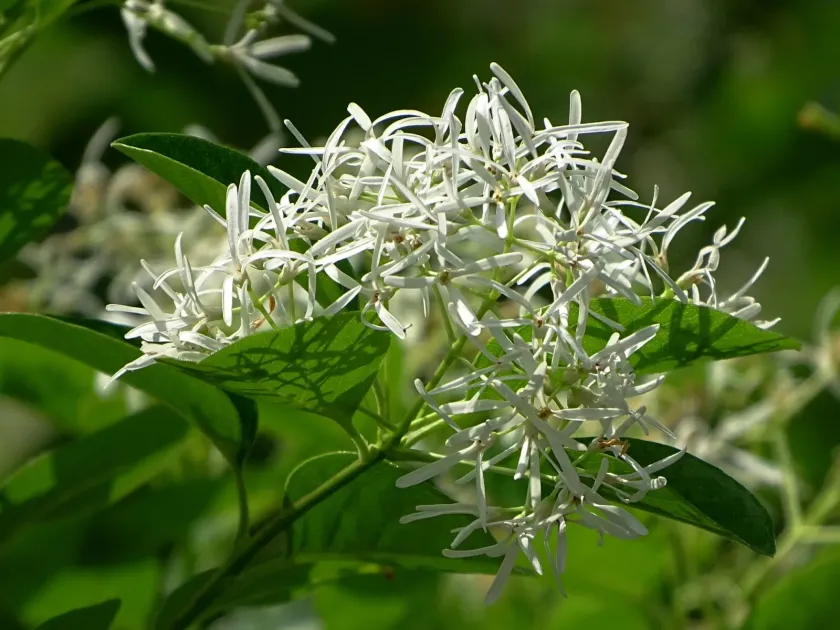
Description
Sowing dates
Propagation of Chionanthus retusus via seeds requires patience due to a long stratification period. Seeds should be sown in autumn or kept cold until spring planting.
Sowing depth should be maintained at approximately 1-2 cm in a well-drained medium. Germination is often slow and irregular, sometimes taking up to two years to fully emerge.
Cuttings represent a more reliable method for many growers. Semi-hardwood cuttings taken in mid-summer respond well to rooting hormones and a high-humidity environment.
Transplanting seedlings to their final location is best performed in early spring. Great care must be taken to minimize root disturbance to ensure successful establishment.
Young trees require consistent irrigation during their first two years to support root system development and avoid transplant shock.
Growing requirements
Chionanthus retusus belongs to the Oleaceae (olive) family and is native to Eastern Asia, specifically regions of China, Korea, and Japan.
The tree thrives in full sun, which is essential for maximizing its characteristic white fringe-like flowering. It tolerates light shade but will produce fewer blooms in such conditions.
A fertile, loamy, and slightly acidic soil is ideal for vigorous growth. The site must have excellent drainage, as the roots are sensitive to waterlogging and compaction.
Regular watering is necessary during dry spells to maintain soil moisture levels. Applying mulch around the base helps retain moisture and regulate soil temperature.
While the tree is hardy, protection from harsh, drying winds is beneficial. In cooler climates, young trees should be sheltered during their first few winter seasons.
Main diseases and pests
This species is generally considered quite resistant to major pests and diseases, making it a low-maintenance choice for professional and home landscaping.
Root rot is the primary risk associated with poor drainage. Monitoring soil moisture and improving drainage infrastructure effectively prevents this physiological issue.
Occasional infestations of scale insects or aphids may occur, particularly in stressed or improperly sited plants. Monitoring the canopy for early signs is highly recommended.
If chemical intervention becomes necessary, use targeted insecticides according to manufacturer guidelines. Biological controls are preferred in residential garden settings.
Annual structural pruning is vital to keep the canopy open. This practice prevents the accumulation of moisture and debris, thereby reducing the likelihood of fungal infections.