
Chiloscyphus polyanthos
Chiloscyphus polyanthos
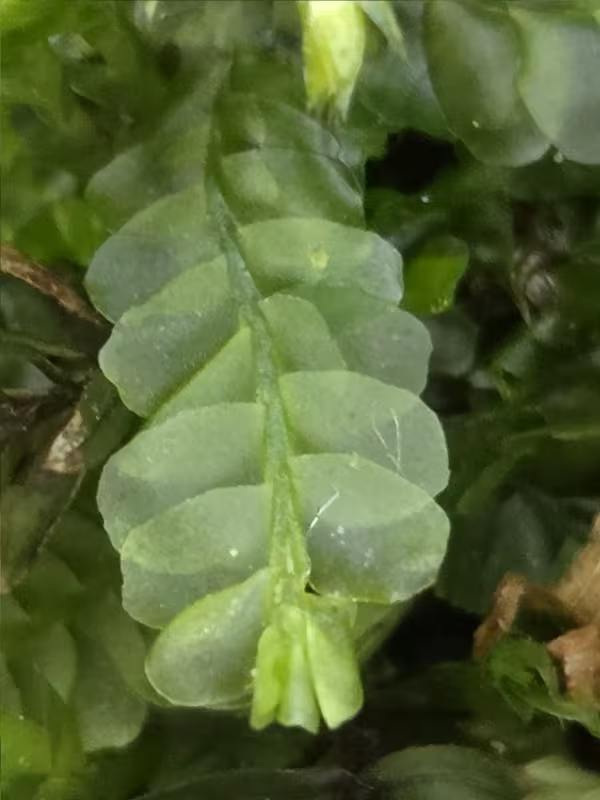
Description
Growing requirements
Chiloscyphus polyanthos is a leafy liverwort belonging to the family Lophocoleaceae. This bryophyte is characterized by its prostrate, branching stems that form dense mats in specific hygrophilic habitats.
The species is widely distributed across the Northern Hemisphere. Its natural habitat includes shaded banks of streams, moist rocks, and decaying wood, where it acts as a primary colonizer of damp, nutrient-poor surfaces.
Environmental requirements for this plant are strict: it thrives only in environments with high ambient humidity, typically ranging between 75% and 95%. Direct sunlight must be avoided to prevent the desiccation of the thallus.
Regarding substrate, the plant prefers acidic to neutral environments. It is highly sensitive to water chemistry, showing a strong intolerance to heavy metals and high salinity levels, which can quickly lead to the death of the specimen.
In a controlled cultivation setting, maintenance involves providing consistent moisture and good air circulation without allowing the plant to remain submerged in stagnant water. It requires stable cool temperatures to mimic its native forest floor environment.
Main diseases and pests
The primary threats to the stability of Chiloscyphus polyanthos populations are environmental degradation and water pollution. Eutrophication of water bodies negatively impacts its growth rate by favoring competing algae species.
Pests such as springtails and certain larvae may consume the soft tissues of the liverwort under stress conditions. Additionally, fungal pathogens, particularly in high-temperature or poorly ventilated environments, can lead to rot and decay of the plant colony.