
Cheiropleuria bicuspis
Cheiropleuria bicuspis
Description
Growing requirements
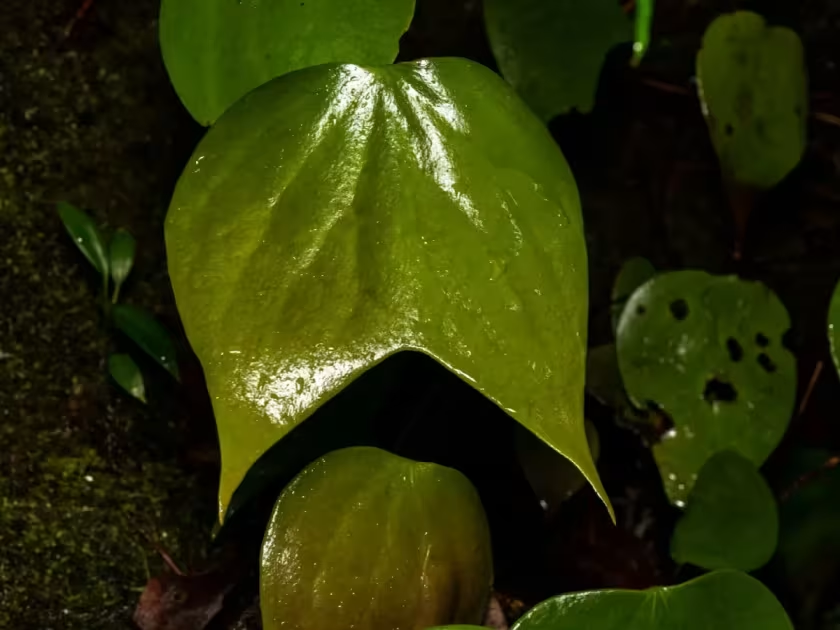
Cheiropleuria bicuspis is a rare and distinct fern species that belongs to the monotypic family Cheiropleuriaceae. The plant is botanically renowned for its unique frond architecture, which typically consists of a simple, entire lamina that terminates in a bifid or bicuspid apex, differentiating it from common pinnate ferns.
The native distribution of this fern encompasses the tropical and subtropical regions of East and Southeast Asia, including parts of Japan, China, and the Philippines. It thrives in humid, shaded forest environments, often anchoring itself in rocky crevices or moist soil substrates within primary forests.
Successful cultivation of Cheiropleuria bicuspis requires strict adherence to environmental parameters. It demands a temperature range of 18°C to 24°C and a very high level of relative humidity. Fluctuations in ambient conditions, particularly dry air or significant temperature drops, should be strictly avoided.
The planting substrate must be exceptionally well-draining, loose, and rich in organic matter. A mixture of acidic potting soil, sphagnum moss, and perlite is often recommended to ensure that the rhizome remains moist but not waterlogged, which is vital for long-term survival.
In terms of economic and practical use, the plant is exclusively grown for botanical research and as a premium specimen in specialized private fern collections. Due to its slow growth rate and specific niche requirements, it is rarely seen in general ornamental horticulture.
Main diseases and pests
The primary threats to the health of this species in artificial cultivation are pathogenic fungi and oomycetes. Excessive moisture combined with stagnant air frequently leads to crown rot and rhizome decay, which are often irreversible once the symptoms become clearly visible on the fronds.
Pest management involves regular monitoring for common indoor pests such as spider mites and scale insects. Maintaining optimal air circulation is one of the most effective cultural practices for preventing pest outbreaks and suppressing the development of fungal leaf spot pathogens.