
Chaubardiella tigrina
Chaubardiella tigrina
Description
Growing requirements
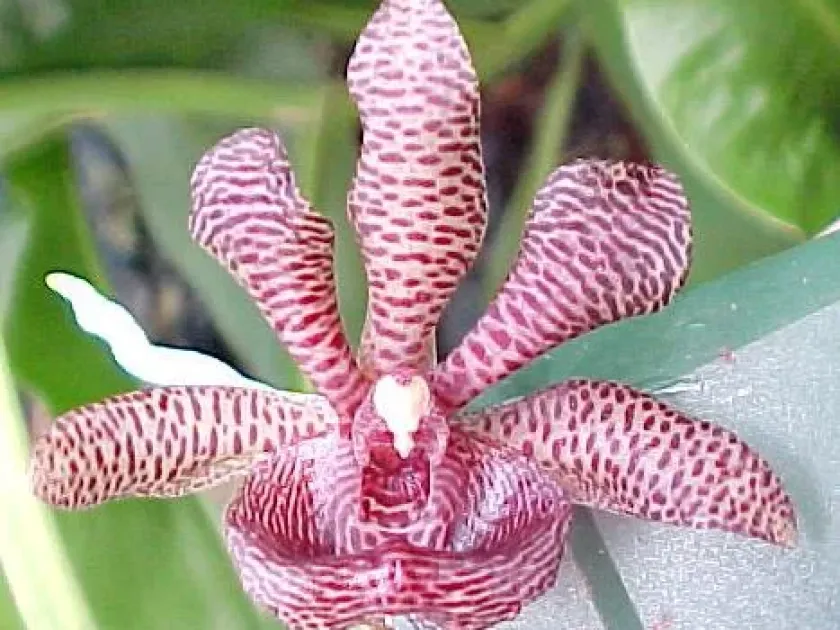
Chaubardiella tigrina is a unique member of the Orchidaceae family, originating from the humid rainforests of Central and South America. This epiphytic species typically grows on tree trunks and branches in areas with dappled sunlight and consistently high moisture.
Biologically, this plant is a sympodial orchid that lacks pseudobulbs, forming compact rosettes of leaves instead. The plant is highly sought after by collectors for its distinctive tiger-spotted floral patterns and its graceful, arching growth habit.
Cultivation requirements prioritize a stable environment with temperatures between 18°C and 25°C. Extreme temperature fluctuations should be avoided, as the species is sensitive to thermal stress, which can lead to premature bud drop or stunted development.
The potting medium must be exceptionally well-draining, mimicking natural forest debris. A mixture of pine bark, perlite, and long-fiber sphagnum moss is recommended to provide both moisture retention and the aeration necessary for epiphytic root respiration.
Agricultural management requires high relative humidity, ideally kept between 70% and 80%. Regular misting or the use of automated fogging systems is essential, as the plant relies on atmospheric moisture absorption to maintain its metabolic functions.
Main diseases and pests
The primary pests affecting this species are spider mites and scale insects, which often thrive in low-humidity environments. Constant monitoring of the leaf undersides is recommended to detect these pests early and prevent significant damage to the plant's tissue.
Root rot caused by stagnant water or fungal pathogens is a significant threat in poorly ventilated greenhouse conditions. Maintaining good air circulation and ensuring the growing medium dries out slightly between waterings are the best defensive measures.