
Chamelaucium hybrids
Chamelaucium hybrids
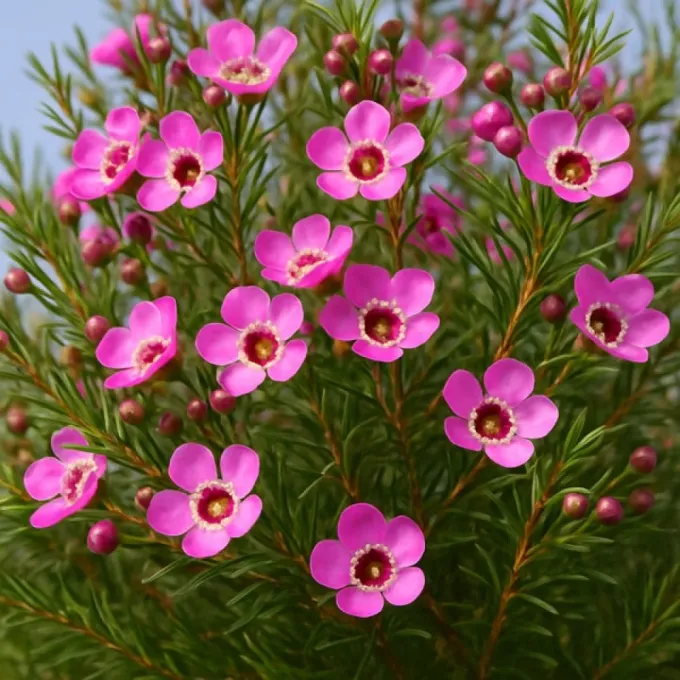
Description
Sowing dates
Chamelaucium hybrids, belonging to the Myrtaceae family, are widely cultivated for their commercial value in the floral industry. Propagation is primarily achieved through cuttings, as this method ensures the consistency of hybrid characteristics that seeds cannot provide.
Cuttings are sourced from mother plants during peak growth periods. The timing of propagation is critical, with spring or early autumn being the preferred seasons for optimal root development under controlled conditions.
The rooting medium must be light, well-draining, and maintain a slightly acidic pH. Avoiding waterlogging is essential, as the root systems of these plants are highly susceptible to rot if moisture levels are poorly managed.
Transplanting to a permanent location requires careful site selection. Whether in open fields or greenhouses, the substrate must provide excellent aeration to support vigorous growth.
Standard planting density ranges from 1 to 1.5 meters between specimens. Proper spacing ensures adequate air circulation, which is vital for preventing humidity-related diseases and fostering uniform plant development.
Growing requirements
Native to Western Australia, these plants thrive in environments with abundant sunlight. Full solar exposure throughout the day is necessary to maintain high rates of photosynthesis and promote uniform flowering.
Soil requirements focus on high drainage capacity, such as sandy or sandy-loam soils. In commercial greenhouse production, raised beds are highly recommended to prevent stagnant water from damaging the crown.
Temperature management is crucial, as Chamelaucium hybrids are sensitive to frost. While they demonstrate moderate drought tolerance, they require a stable, moderate climate to reach their full potential.
Irrigation should be precise, allowing the soil to dry out between watering intervals. Over-fertilization, especially with phosphorus, must be avoided, as these plants are sensitive to high nutrient concentrations common in traditional garden fertilizers.
Regular pruning following the blooming season is a key agricultural practice. This procedure stimulates lateral branching, maintains a compact, aesthetic shape, and significantly increases the yield of marketable stems.
Yield
The primary use of Chamelaucium hybrids is for high-quality cut flowers, favored for their longevity and decorative appeal. They are widely utilized by florists as a reliable filler in complex floral arrangements.
Yield is measured by the number of harvestable stems per plant. Mature, well-managed bushes can produce between 50 and 100 high-quality stems per season, depending on the specific hybrid and local growing conditions.
The economic value is driven by the vibrant color range and the size of the blossoms. Successful production requires a systematic approach to harvesting, targeting specific stages of bud opening for maximum shelf life.
Post-harvest logistics involve immediate cooling and the use of specialized preservative solutions. This management ensures that the stems maintain their fresh appearance during transit to international markets.
Market demand is stable, with quality control being the primary factor in financial return. Stems must be uniform, clean, and free from any developmental deformities or pest damage.
Main diseases and pests
The most significant threat to this crop is Phytophthora root rot, triggered by poor drainage and excessive soil moisture. Once established, this pathogen can lead to total crop failure.
Insect pests, specifically spider mites and aphids, pose a constant challenge. They primarily target fresh growth and developing buds, leading to unsightly damage that lowers the overall quality of the cut flower product.
Powdery mildew can become an issue in greenhouses with poor ventilation and high humidity. Regular scouting and preventative fungicide applications are necessary components of an effective integrated pest management (IPM) strategy.
Biological control methods, such as the introduction of natural predators, are preferred during the budding phase to protect the integrity of the flowers from harsh chemical residues.
- Regular inspection of root zone health
- Strict control of irrigation cycles
- Maintenance of optimal greenhouse humidity
- Isolation of symptomatic plants
Harvesting
Harvesting is performed manually using sterilized, sharp shears. Decontamination of tools is mandatory to avoid cross-contamination between different plants within the production area.
The best time for harvesting is during the early morning hours. This timing ensures that the plant tissue is fully turgid, which contributes to higher post-harvest stem durability.
Immediately after cutting, stems are placed in water or hydrating solutions. Preventing dehydration and heat stress during the transfer to the cooling room is essential for quality assurance.
Grading is based on stem length, blossom density, and the degree of flower opening. Only the highest quality stems meet the requirements for export and premium floral retail.
Storage in cold rooms at temperatures between 2 and 5 degrees Celsius is standard practice. This extends the product's shelf life, allowing it to remain fresh for several weeks post-harvest.