
Chaenorhinum crassifolium
Chaenorhinum crassifolium
Description
Growing requirements
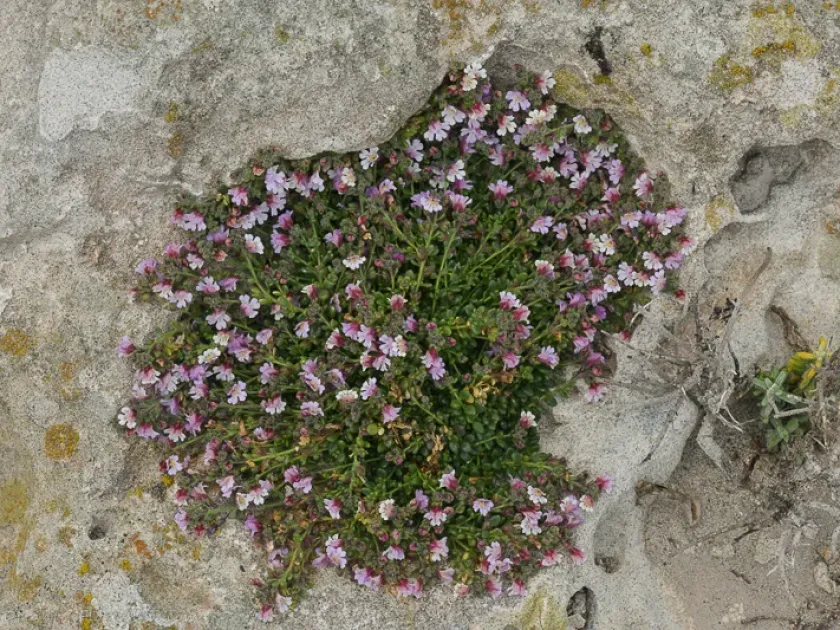
Chaenorhinum crassifolium is a perennial herbaceous plant belonging to the Plantaginaceae family. Native to the mountain regions of Southwestern Europe, this species is well-adapted to thriving in crevices and limestone rock formations.
The plant is highly valued for its succulent leaves, which act as water storage organs, making it exceptionally drought-tolerant. In cultivation, it thrives in well-drained, gritty substrates with a neutral or slightly alkaline pH balance.
Full sun exposure is essential for the healthy development of this species. It is a perfect candidate for rock gardens, scree beds, or alpine wall plantings where drainage is excellent and there is minimal competition from faster-growing vegetation.
Botanically, it forms low-growing mats of foliage that produce small, snapdragon-like flowers during the summer months. Its root system is specialized for anchoring in stony surfaces, requiring little soil volume to maintain vigor.
Agrotechnical management is minimal; the plant dislikes overly fertile soils, which can cause it to become leggy and lose its characteristic compact habit. Fertilizer application should be avoided to maintain the plant's natural form and health.
Main diseases and pests
Root rot is the primary threat to Chaenorhinum crassifolium, typically resulting from poor drainage or standing water during the winter months. Ensuring a porous soil mix is the most effective preventative measure.
Slugs and snails can pose a significant threat to the tender foliage, particularly in damp climates. Using grit or sharp sand as a top dressing around the base of the plant can serve as an effective physical barrier against these pests.
Aphids may occasionally target the developing flower buds during dry spells, though they rarely cause structural damage to established plants. Regular monitoring allows for simple manual control or light soap-based treatments.
Powdery mildew can occur if the plant is grown in overcrowded conditions with poor air circulation. Proper spacing between individual plants is necessary to promote healthy airflow and prevent fungal development.
To ensure the longevity of the plantings, one must avoid overhead irrigation during hot, humid afternoons, as this creates microclimates favorable for pathogens. Watering should be directed at the base if necessary, but natural rainfall is usually sufficient.