
Rigid hornwort
Ceratophyllum demersum L.
Description
Growing requirements
Rigid hornwort (Ceratophyllum demersum L.) is a perennial submerged aquatic plant belonging to the Ceratophyllaceae family. It is a cosmopolitan species, found in freshwater habitats across almost all temperate and tropical regions of the globe.
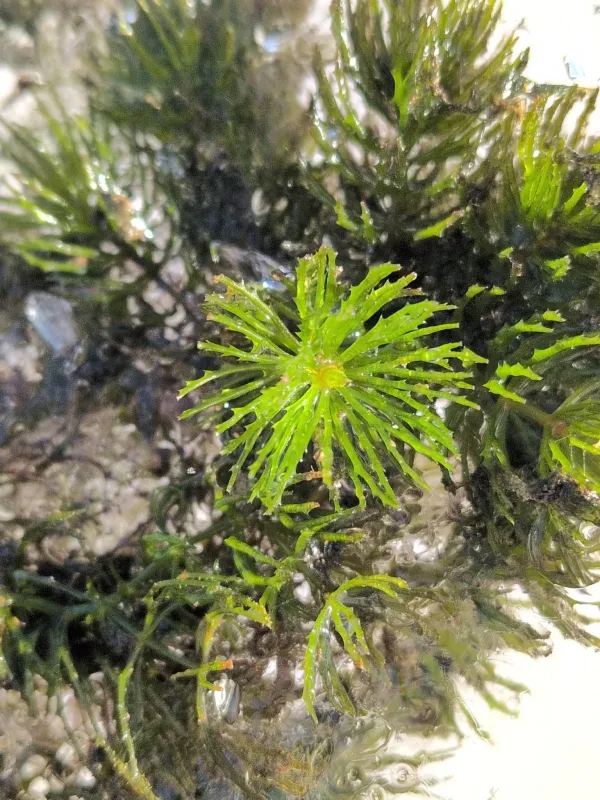
The plant lacks true roots, utilizing modified leaves (rhizoids) to anchor itself into the sediment. Its stems are flexible, highly branched, and densely covered with stiff, whorled leaves that give it a characteristic pine-like appearance, which is essential for oxygenating aquatic ecosystems.
For optimal growth, the species prefers stable water conditions with a pH range of 6.0 to 8.0. It thrives in temperatures between 20°C and 28°C, though it is highly adaptable and can survive in cooler water during dormant winter months, making it a versatile choice for various climates.
Hornwort acts as a highly efficient bio-filter, absorbing excessive nutrients such as nitrates and phosphates. This makes it a preferred plant for natural water purification systems, as it limits the availability of these nutrients to invasive algae species.
Cultivation requires minimal intervention, primarily focusing on propagation via stem cuttings and occasional thinning. Since the plant absorbs nutrients directly through its leaves, it requires clean, moving water to prevent sediment from settling on the foliage and inhibiting photosynthesis.
Yield
The productivity of hornwort is remarkable due to its rapid biomass accumulation under nutrient-rich conditions. In large-scale aquaculture, its yield can reach several tonnes per hectare annually, provided the water environment is effectively managed for nutrient levels.
Beyond its ecological role, hornwort is utilized for phytoremediation, effectively extracting heavy metals from polluted industrial or agricultural runoff. This process helps restore the quality of degraded water bodies, providing significant environmental and economic benefits.
In fishery management, the plant serves as a critical substrate for fish spawning and provides essential shelter for juveniles, increasing survival rates in hatchery ponds. It also contributes to the overall aquatic food chain by supporting micro-invertebrates.
Harvesting is performed through mechanical weeding, usually during the peak of the growing season. The harvested biomass is frequently used for composting or as organic fertilizer due to its high nutrient content and rapid decomposition rate.
Maximizing yield in controlled environments involves supplemental fertilization with aquatic-specific nutrients if natural levels are depleted. Consistent harvesting is necessary to prevent the plant from becoming overly dominant in confined water systems.
Main diseases and pests
Rigid hornwort is generally robust, but it can be susceptible to damage from excessive turbidity, which restricts sunlight penetration. In stagnant or heavily polluted water, it may succumb to fungal infections that manifest as browning and stem decay.
Agricultural runoff containing herbicides presents a major chemical threat to the plant. Exposure to such pollutants can lead to rapid cellular damage, causing the stems to become brittle and eventually disintegrate, leading to water quality degradation.
Competition from aggressive floating or invasive aquatic weeds can shade out the plant, reducing its ability to photosynthesize. Regular monitoring of the pond surface is required to ensure light reaches the submerged colonies.
Physical damage caused by improper mechanical harvesting techniques can lead to tissue decay. It is crucial to use specialized equipment that removes the plant carefully without macerating the delicate stems, which would introduce rot-inducing bacteria into the water column.
Preventive maintenance includes ensuring adequate water flow, which keeps the foliage clean and healthy. Timely removal of dead matter is the most effective way to prevent localized disease outbreaks within the hornwort population.