
Cephalotus follicularis
Cephalotus follicularis
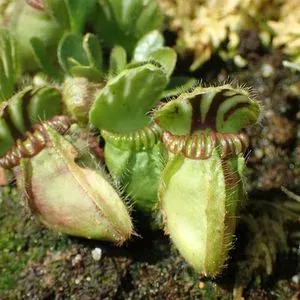
Description
Growing requirements
Cephalotus follicularis, commonly known as the Albany pitcher plant, is a unique carnivorous species endemic to the southwestern corner of Western Australia. It belongs to the monotypic family Cephalotaceae and occupies specific boggy, sandy habitats.
In cultivation, this plant requires high light intensity, ideally bright indirect sunlight. Proper light ensures the characteristic deep purple or red coloration of the pitchers, which is a key indicator of plant health and vitality under artificial or natural conditions.
The growing medium must be highly acidic and well-draining, typically consisting of a mix of peat moss, perlite, and silica sand. The plant is extremely sensitive to root disturbance, so repotting should be performed infrequently and with extreme caution.
Temperature control is essential: the plant thrives in daytime temperatures between 20°C and 25°C with a notable cooling period at night. Consistency in temperature management is critical to prevent heat-related stress, which can lead to sudden plant death.
Water quality is paramount; only distilled, reverse osmosis, or rain water should be used to avoid salt buildup. The substrate should be kept consistently moist but not waterlogged, as stagnant water is a primary cause of root rot in this species.
Main diseases and pests
Root rot is the most devastating condition for Cephalotus follicularis, primarily caused by inadequate aeration in the substrate or excessively heavy soil. Once root decay begins, it is often difficult to reverse, necessitating prompt action.
Pests like mealybugs and aphids can be particularly troublesome as they hide within the pitcher traps. Infestations weaken the plant and can serve as vectors for secondary fungal infections that spread rapidly in humid environments.
Spider mites are another common threat, especially in indoor environments with low humidity. They typically cluster on the undersides of the leaves or near the rim of the pitchers, causing loss of turgor and discoloration of the foliage.
To manage threats, growers should prioritize cultural controls such as improving air circulation and maintaining proper light levels. When chemical intervention is necessary, insecticides must be applied at a very low dosage to avoid phytotoxicity.
Regular inspection is the best defense. Removing dead leaves and debris from the base of the plant prevents the formation of mold, which often precedes more serious infections in the confined spaces of the pitcher traps.