
Syrian cephalaria
Cephalaria syriaca (L.) Roem. & Schult.
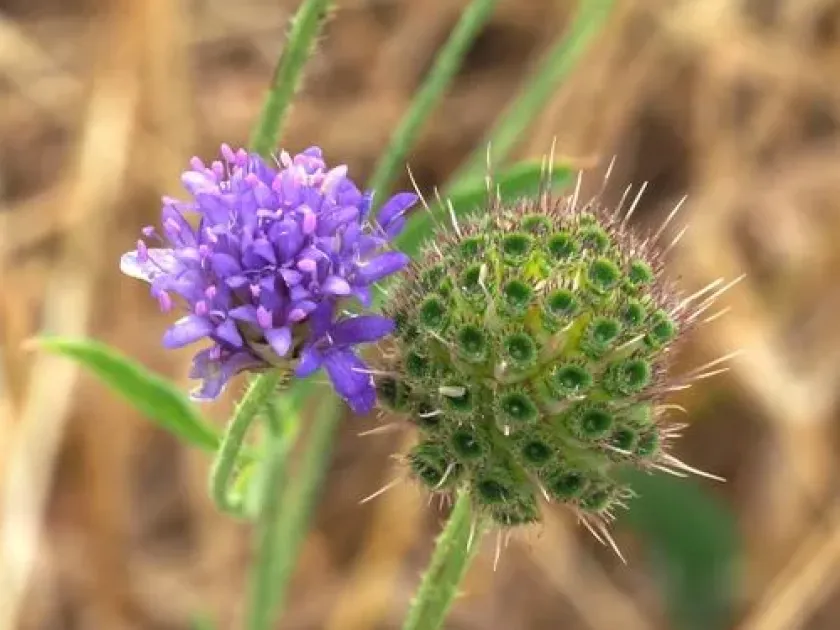
Description
Sowing dates
Syrian cephalaria is an annual herbaceous plant belonging to the Caprifoliaceae family. In agricultural settings, it is often classified as a persistent weed that invades cereal and pulse fields.
The seeds can germinate during the autumn period, allowing the plant to overwinter in a rosette stage, or during the spring when soil temperatures reach the threshold for growth.
Once established, the plant develops a robust, upright stem that can significantly outcompete surrounding crops for nutrients, water, and essential sunlight.
The reproduction strategy involves the production of a large number of seeds, which can remain viable in the soil seed bank for several years, creating long-term management challenges.
Mechanical weed control, such as pre-planting cultivation, is considered the most effective way to manage its population before it establishes a deep taproot system.
Growing requirements
This species thrives in well-drained, fertile soils, particularly in chernozem areas, showing a strong preference for neutral to slightly alkaline chemical properties.
Light intensity is a critical factor for the development of Syrian cephalaria, as it struggles to grow in shaded environments or within dense, high-yielding crop stands.
The plant exhibits exceptional drought tolerance, allowing it to dominate in arid and semi-arid environments where other competing vegetation fails to survive.
It prefers climates with moderate temperatures but possesses the physiological capacity to withstand extreme diurnal fluctuations common in steppe ecosystems.
Adequate soil aeration is necessary for optimal development, as excessive compaction or waterlogging typically limits its expansion in agricultural land.
Main diseases and pests
Powdery mildew represents a significant fungal threat, especially in humid conditions, which can inhibit the photosynthesis process and reduce seed production.
Various insect pests, particularly stem-boring beetles, can weaken the structural integrity of the plant, potentially leading to lodging and reduced biomass.
The plant can act as a reservoir for aphids and other viral vectors, which poses a secondary risk to adjacent economic crops by facilitating disease transmission.
Root rot pathogens may affect the plant during cool, wet springs, although the species is generally resilient and rarely suffers from complete population collapse due to disease.
Integrated weed management, including the rotation of crop varieties and the strategic use of herbicides, is essential for maintaining control over this weed in industrial farming.