
Tournefort's hackberry
Celtis tournefortii
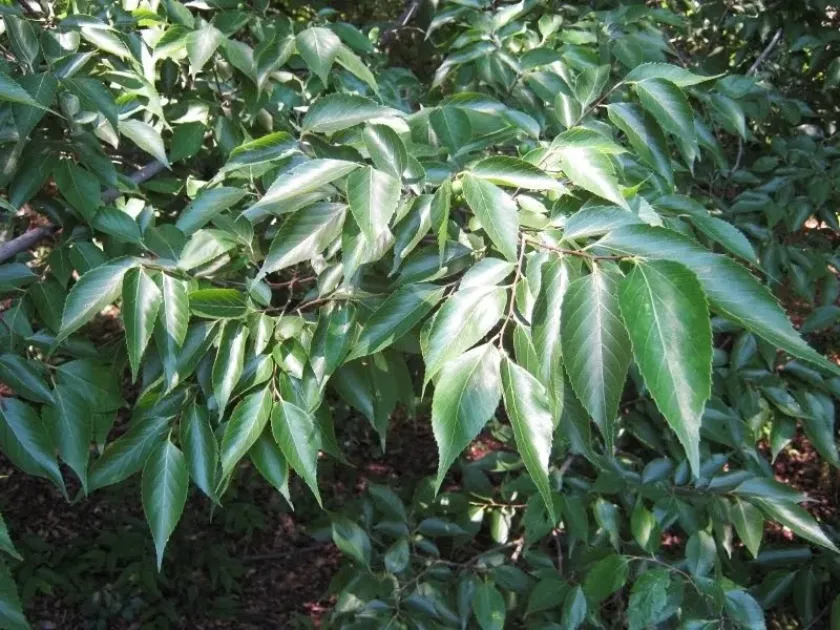
Description
Growing requirements
Tournefort's hackberry (Celtis tournefortii) is a deciduous tree or shrub belonging to the Cannabaceae family. It is a highly resilient plant known for its ability to thrive in challenging environments where other woody species struggle to survive.
The species originates from Southeastern Europe and Western Asia, particularly the rocky and mountainous regions. It is well-adapted to Mediterranean and semi-arid climates, showcasing extreme tolerance to heat and solar radiation.
Regarding soil requirements, this culture is highly undemanding. It thrives in limestone soils, rocky substrates, and thin, alkaline soils. It is specifically valued for its ability to stabilize slopes and grow in rocky terrain where soil depth is minimal.
As a light-demanding species, it requires full sun exposure to maintain its form and health. Planting in shaded areas leads to sparse growth and reduced vigor. It is exceptionally drought-tolerant once established, requiring no additional irrigation in its native range.
Cultivation practices are straightforward. Planting should occur in early spring or autumn. Young trees need protection from weeds during the first two seasons, but once the root system is deep-seated, the plant becomes remarkably self-sufficient.
Main diseases and pests
Tournefort's hackberry is generally resistant to major pests and diseases. Its hardy nature makes it a reliable choice for urban forestry and ecological restoration projects where chemical intervention is not feasible or desired.
Minor pest issues can include occasional aphid infestations on young leaves during hot, dry springs. These are typically self-limiting and rarely reach a threshold that would require the application of pesticides in a forestry context.
Fungal issues, such as powdery mildew, may occur if the trees are planted too densely or in areas with poor airflow. Maintaining proper spacing during the initial planting phase is the most effective cultural practice to prevent such issues.
Small rodents can pose a risk to young trees by gnawing on the bark during cold winters when food is scarce. Protective tubes or physical barriers around the base of the trunk are recommended until the bark thickens sufficiently to resist damage.
Overall management should focus on site selection and ensuring sufficient space between individual trees. Regular removal of damaged or dead wood during the dormant season maintains the health and structural integrity of the plant.