
Ruderal hemp
Cannabis ruderalis
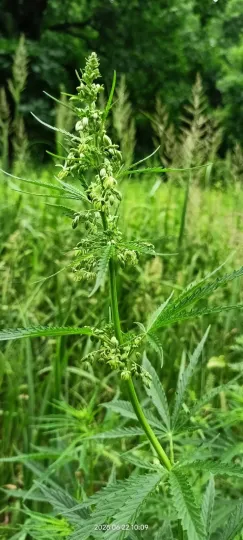
Description
Sowing dates
Ruderal hemp is a wild-growing species that does not require human-assisted sowing, as it reproduces primarily through self-seeding in nature.
The seeds are dispersed by wind, water, and animals, often colonizing disturbed soils, roadsides, and abandoned agricultural fields.
Because the seeds lack a deep dormancy period, they can germinate quickly under favorable moisture and temperature conditions in the early spring.
In agricultural settings, this species is considered a persistent weed that spreads rapidly if the soil remains fallow for extended periods.
Biological monitoring shows that the species uses its opportunistic growth strategy to colonize new territories before other plants emerge.
Growing requirements
Belonging to the Cannabaceae family, this plant is highly adaptable to various soil types, ranging from sandy to nutrient-rich chernozem.
It is characterized by extreme drought resistance, allowing it to survive in arid environments where most crops would struggle to grow.
The species requires direct and intense sunlight for its full vegetative development and successful reproduction during the summer months.
Its powerful taproot system provides stability and access to deep moisture, which is essential for its survival in unmanaged landscapes.
The plant exhibits high thermal flexibility, making it well-suited for temperate and continental climates found across its native Eurasian range.
Main diseases and pests
The plant is naturally resistant to many pests, but it can be affected by powdery mildew, especially in environments with high humidity.
Insects like the hemp flea beetle can cause significant damage to young seedlings, potentially affecting the growth rate of the population.
Stem borers pose a threat to mature plants by tunneling through the stalks, which weakens the structural integrity of the plant.
Environmental stresses, such as excessive moisture, can predispose the root system to fungal infections, causing plant decay.
- Powdery mildew
- Hemp flea beetle
- Stem borer
- Root rot fungi