
Oriental bittersweet
Celastrus orbiculatus Thunb.
Description
Growing requirements
Oriental bittersweet (Celastrus orbiculatus) is a vigorous, deciduous woody vine that belongs to the Celastraceae family. Originally native to East Asia, including regions in China, Japan, and Korea, it has become widely recognized for its rapid growth and adaptability to various temperate environments.
The plant exhibits remarkable soil tolerance, thriving in both nutrient-poor conditions and well-drained fertile soils. While it can handle partial shade, full sun exposure is ideal for promoting vigorous development and ensuring the most vibrant display of its autumn foliage.
Regarding climate, this vine is highly frost-tolerant, making it suitable for cultivation in diverse zones. However, due to its invasive potential in some regions, it is essential to manage its growth carefully by selecting appropriate planting sites away from native woodland ecosystems.
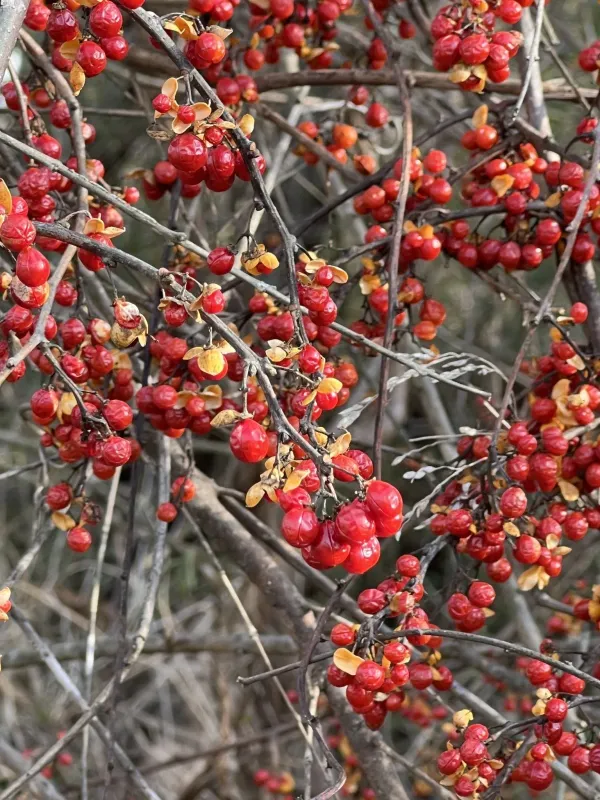
Successful cultivation requires the provision of strong, vertical support systems such as trellises, fences, or pergolas. Pruning is a critical agrotechnical practice, as it helps to control the vine's significant biomass and encourages the production of its characteristic showy, yellow-capsuled fruits.
In terms of usage, the plant serves as an excellent choice for rapid green screening and covering structures. Beyond landscaping, its decorative fruit-bearing branches are frequently harvested for the floral industry, particularly for creating seasonal indoor arrangements during the autumn and winter months.
Main diseases and pests
While generally robust, Celastrus orbiculatus can occasionally face pest pressure. Aphids and spider mites are the most common insects to observe, typically appearing during periods of drought or when the plant is under thermal stress, which can lead to leaf yellowing or stunted growth.
Fungal issues, such as powdery mildew, may occur if the planting density is too high or if airflow around the foliage is restricted. Maintaining proper distance between individual vines and performing regular thinning helps mitigate the risk of disease and ensures long-term plant health.