
Greater celandine
Chelidonium majus L.
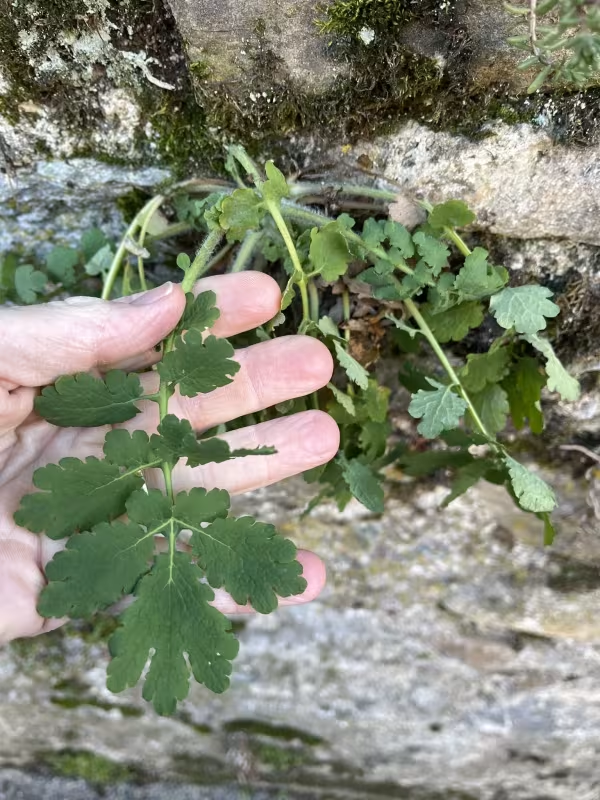
Description
Sowing dates
Greater celandine is propagated via seeds, which are sown either in late autumn (October) or early spring once the ground thaws.
Seeds should be shallowly buried at a depth of 1–1.5 cm to ensure proper germination and contact with moist soil particles.
Spring sowing requires consistent soil moisture, as germination typically takes two to three weeks depending on the temperature conditions.
For commercial cultivation, row spacing of 45 to 60 cm is recommended to allow for easy weeding and management of the plantation.
Autumn sowing is generally preferred in colder regions as it allows the seeds to undergo natural stratification, leading to more uniform spring emergence.
Growing requirements
This crop, a member of the Papaveraceae family, thrives in fertile, loamy soils with neutral to slightly acidic pH levels.
While the plant adapts well to various light conditions, it performs best in partial shade or areas with consistent, diffused sunlight.
Moderate but consistent soil moisture is essential, particularly during the early vegetative stages before the plant establishes its root system.
Regular cultivation between the rows is necessary to prevent soil compaction and promote aeration, which the plant strongly favors.
Greater celandine is highly winter-hardy and requires no special protection, making it suitable for temperate climates across the Northern Hemisphere.
Yield
The primary economic focus is the harvest of the aerial parts, which contain valuable alkaloids such as chelidonine and sanguinarine.
Average yield for dry herbal material ranges from 1.5 to 2.5 tonnes per hectare, depending on soil fertility and plant density.
Productivity peaks during the second year of growth, as the plant develops a robust root system and more vigorous vegetative mass.
The plant demonstrates a strong regenerative capacity, allowing for multiple harvests within a single season under favorable moisture conditions.
Quality control focuses on the alkaloid content, which is maximized when the plant is harvested at the precise onset of full bloom.
Main diseases and pests
Greater celandine is naturally resistant to most pests due to the bitter, toxic milky sap present throughout the plant's tissues.
In cases of poor drainage or high humidity, powdery mildew may develop, necessitating improved airflow and field sanitation practices.
Early-stage weed competition is the most significant threat to the crop, as young plants grow slowly and are easily suppressed by invasive species.
Root rot can occur in waterlogged soils, making appropriate land preparation and drainage essential for maintaining a healthy stand.
Generally, the crop requires few chemical inputs, making it an excellent candidate for organic farming practices and sustainable agriculture.
Harvesting
Harvesting is performed during the peak flowering stage to ensure the highest concentration of medicinal compounds in the leaves and stems.
The aerial biomass is typically cut at 10–15 cm above the soil surface using mechanical harvesting equipment designed for herbal crops.
Rapid transport to the processing facility is required to prevent the biomass from heating up, which would degrade the chemical quality.
Drying must be conducted in well-ventilated areas or controlled-temperature dryers kept strictly below 50 degrees Celsius.
Once dried, the product is milled and packaged for use in the pharmaceutical and cosmetic industries as a raw herbal material.