
Catesbaea spinosa
Catesbaea spinosa
Description
Growing requirements
Catesbaea spinosa, commonly known as the Lily thorn, is a distinctive evergreen shrub belonging to the Rubiaceae family. This species is native to the Caribbean region, particularly the Bahamas, and thrives in warm, humid tropical environments.
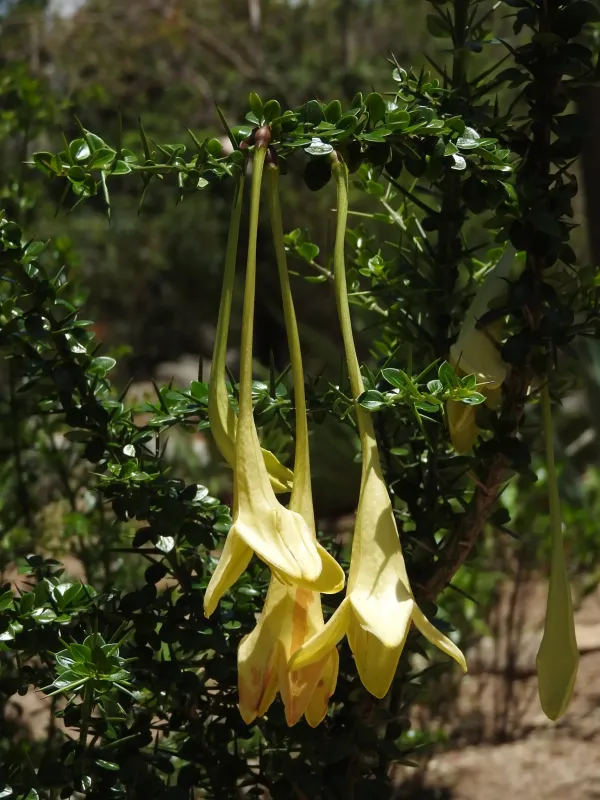
The plant is easily recognized by its rigid, sharp spines that sprout from the leaf axils, giving it a menacing appearance. Its foliage is small and leathery, an adaptation that helps the shrub survive in its native xeric or seasonally dry habitats.
To cultivate Catesbaea successfully, one must replicate its natural tropical conditions. It requires a well-draining, nutrient-rich potting mix with an acidic to neutral pH. Proper drainage is absolutely critical, as the roots are highly susceptible to rot if left in standing water.
Regarding climate, this plant is not frost-tolerant and must be grown in a temperature-controlled environment such as a greenhouse or conservatory in temperate zones. It thrives in high humidity and bright, indirect light throughout the growing season.
In addition to its ornamental value, the plant produces large, attractive, cream-colored, trumpet-shaped flowers. These blooms are followed by small, round fruits that are edible, though the plant is primarily maintained for its unique architectural and botanical characteristics.
Main diseases and pests
Common pests include spider mites, which thrive in low-humidity environments, and scale insects that can hide under the spines or leaves. Routine inspection is essential to catch infestations early.
Fungal issues, such as root rot and leaf spot, are prevalent if the irrigation schedule is too aggressive or if ventilation is insufficient. Implementing a strict watering routine based on soil moisture levels significantly mitigates these risks.