
Castela coccinea
Castela coccinea
Description
Growing requirements
Castela coccinea is a woody shrub belonging to the Simaroubaceae family. This species is native to specific arid environments in the Americas, where it has evolved to thrive in harsh, water-scarce conditions.
The plant demands well-draining soil structures, particularly those found in rocky or sandy substrates. Its root architecture is specifically adapted to seek moisture at significant depths, allowing it to survive in regions with minimal precipitation.
Optimal growth occurs in tropical and subtropical climates where high temperatures persist year-round. It lacks tolerance for prolonged frost, which classifies it as a sensitive species regarding geographical distribution in agriculture.
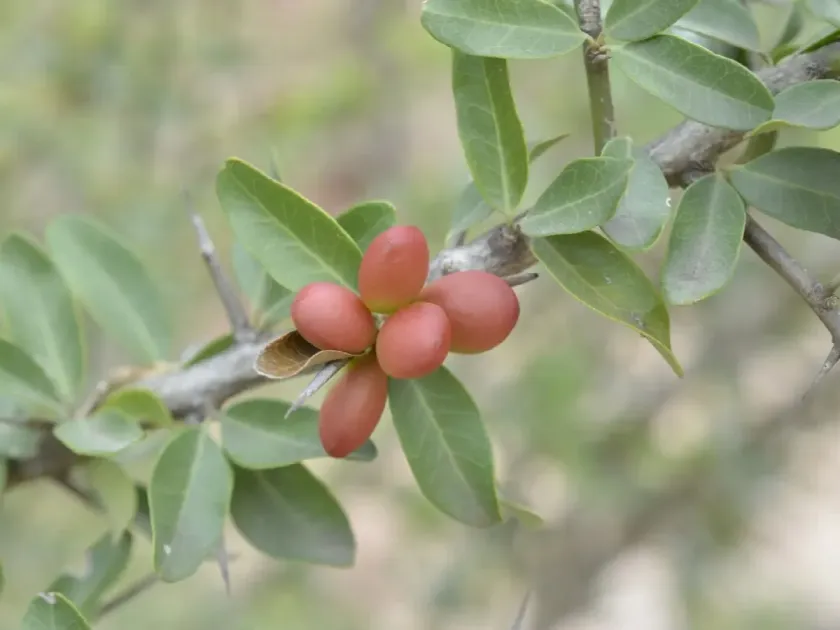
Morphologically, the shrub is identified by its defensive spines and tough, coriaceous leaves. These features serve as an effective mechanism to reduce transpiration and protect the plant from local herbivores.
The plant is recognized in ethnobotany and pharmacology for its concentration of quassinoids. These complex compounds are the primary focus of studies investigating the therapeutic potential of the species in natural medicine.