
Castanospora alphandii
Castanospora alphandii
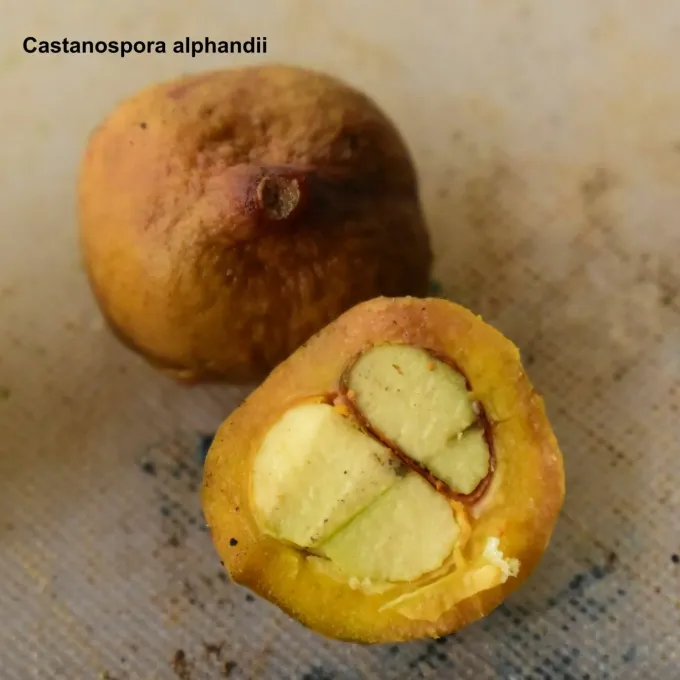
Description
Sowing dates
Castanospora alphandii is an interesting member of the Sapindaceae family native to the tropical rainforests of northeastern Australia. The propagation of this tree requires precise environmental conditions to ensure successful germination.
The seeds of this species are recalcitrant, meaning they lose viability quickly and should be sown as soon as possible after collection. A warm, humid environment with temperatures between 25°C and 28°C is necessary.
Pre-treatment, such as light scarification of the seed coat, helps in water uptake and promotes faster sprouting. High-quality, well-draining potting soil is recommended for the initial development of the seedlings.
Young plants are particularly sensitive to direct sunlight and must be placed in a shaded area initially. Gradual hardening-off is required before the seedlings are transplanted to their permanent location.
Maintaining consistent moisture levels in the growing medium is critical during the first few months. Over-drying can lead to the death of the seedling, while over-watering may cause root decay.
Growing requirements
As a tropical endemic, Castanospora alphandii is highly sensitive to cold temperatures. It thrives in frost-free climates and requires stable, warm temperatures throughout the entire year.
The ideal soil for this species is a deep, fertile, and well-draining loam. It prefers neutral to slightly acidic conditions to allow for optimal nutrient absorption from the root system.
Regular watering is essential, especially during the active growth phases. However, proper drainage is mandatory to prevent waterlogging, which the species does not tolerate well.
Light intensity should be managed based on the age of the plant. Mature trees can withstand full sun, whereas younger specimens require partial shade to avoid foliage damage and excessive transpiration.
Agronomic maintenance includes periodic fertilization with micronutrient-rich formulas to support vigorous canopy development and maintain the rich color of its dense foliage.
Yield
The economic and agricultural utility of Castanospora alphandii is primarily focused on its ornamental and forestry value. It is prized for its attractive habit and robust wood quality.
Fruit production generally commences after the tree reaches a sufficient level of maturity, usually taking 5 to 7 years. While the seeds have historical use, they are not a significant commercial crop.
The timber of the tree is dense and durable, making it suitable for specialized woodworking and fine furniture manufacturing. It is a niche material that reflects the quality of its growth environment.
The biomass produced by this tree is considerable, aiding in ecosystem stabilization and providing habitat for local fauna within its native Australian range.
In modern horticulture, it is highly sought after by botanical gardens and collectors of tropical flora due to its unique botanical characteristics and rarity in cultivation.
Main diseases and pests
The most common threats to Castanospora alphandii are fungal pathogens, particularly those causing root rot. These diseases are most prevalent in soils that lack adequate drainage or air circulation.
Common pests like scale insects may infest the stems and leaves, extracting plant sap. Integrated pest management, including regular inspection, is recommended to keep pest populations at a manageable level.
Spider mites can be an issue in indoor or greenhouse settings where air humidity levels drop too low. Proper ventilation and moisture management are effective preventative measures.
Physical damage from strong winds can weaken the canopy and provide entry points for pathogens. Pruning damaged branches is necessary for maintaining plant health.
Nutrient deficiencies, specifically in iron or magnesium, can occur if the soil pH is not properly managed, resulting in chlorosis and reduced photosynthetic efficiency.