
Queensland cassia
Cassia queenslandica
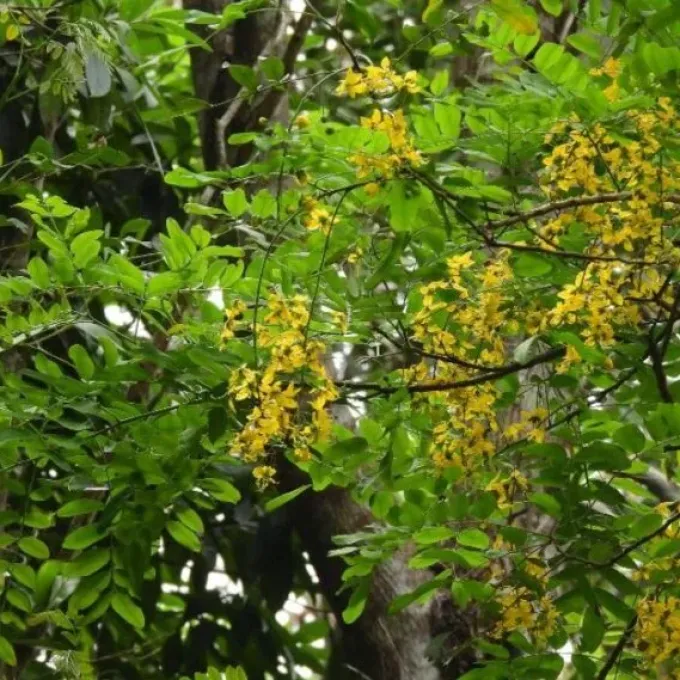
Description
Growing requirements
Queensland cassia (Cassia queenslandica) is a perennial evergreen tree belonging to the Fabaceae family. It is native to the tropical regions of Australia, where it thrives in warm, humid environments as part of the local ecosystem.
The plant requires well-drained, sandy loam soils to flourish and is highly sensitive to waterlogged conditions, which can lead to root rot. It performs best in nutrient-rich soil that allows for deep root penetration typical of this legume species.
Climate requirements include full sunlight exposure and high temperatures throughout the year. It is strictly a tropical plant that does not tolerate frost, making it suitable only for regions without significant temperature fluctuations below 15 degrees Celsius.
Agricultural management involves regular irrigation during the initial establishment phase and the application of balanced fertilizers to support the vigorous growth habit of the tree. Pruning is often necessary to maintain the desired canopy shape.
The primary economic and horticultural use of Cassia queenslandica is in landscape architecture. It is planted as a shade tree in public parks and residential gardens due to its aesthetic value and impressive flowering periods.
Main diseases and pests
Common health issues include fungal root pathogens caused by soil compaction or poor drainage. Pests such as aphids, scale insects, and certain lepidopteran larvae may occasionally infest the foliage, requiring integrated pest management practices.