
Cassia leschenaultiana
Cassia leschenaultiana
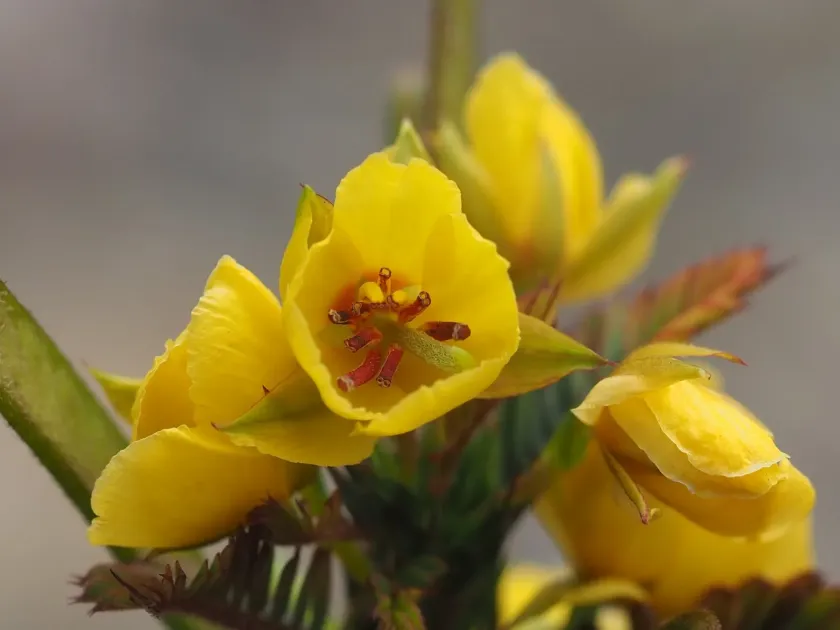
Description
Sowing dates
Cassia leschenaultiana is an annual or short-lived perennial belonging to the Fabaceae family. In industrial agriculture, sowing is typically performed at the beginning of the rainy season when soil temperatures are conducive to germination and moisture levels ensure rapid establishment.
Before sowing, seeds often undergo scarification to overcome physical dormancy caused by a hard seed coat. Optimal planting depth is between 1 and 2 centimeters, providing enough cover for germination while allowing seedlings to emerge efficiently in loose soil structures.
The recommended planting pattern depends on the intended use: for biomass production, row planting with 30-40 cm spacing is common. High plant density in the early stages helps suppress weed growth through rapid canopy closure.
In regions with distinct monsoon patterns, sowing is synchronized with the onset of regular rainfall. This timing is critical, as the crop is most vulnerable to drought and temperature fluctuations during the first three to four weeks of growth.
Once seedlings are established, mechanical inter-row cultivation is performed, often combined with thinning if the initial sowing density exceeds recommended agronomic limits for the specific production zone.
Growing requirements
The crop thrives in well-drained sandy or loamy soils with a neutral to slightly acidic pH. Its ability to grow in nutrient-poor soils makes it a highly valuable species for land reclamation and soil fertility restoration projects.
Cassia leschenaultiana is primarily adapted to tropical and subtropical climates. It requires abundant sunlight and high solar radiation; planting in shaded areas significantly reduces vegetative biomass and stunts overall plant development.
While the plant shows good resilience to short dry spells due to a deep, penetrating root system, consistent moisture throughout the active growing season is necessary to achieve maximum forage or biomass potential.
The ideal temperature range for growth is between +22 and +32 degrees Celsius. Development slows significantly or ceases below +15 degrees Celsius, which effectively limits the geographic range of its cultivation to warmer latitudes.
Proper water management is essential, as the root system is highly sensitive to waterlogging. Avoiding low-lying areas or heavy clay soils prone to compaction is vital to prevent root rot and overall crop failure.
Yield
The economic value of Cassia leschenaultiana is primarily derived from its role as a high-quality forage crop and an effective green manure. Its biomass is rich in nitrogen, making it an excellent natural fertilizer for subsequent agricultural crops.
Yield capacity is directly influenced by planting density and appropriate agronomic care. Under optimal conditions, the plant can sustain multiple harvests per growing season, providing a steady and reliable supply of organic matter.
Seed production is prolific, facilitating the ease of on-farm seed multiplication. Harvesting the seeds requires careful timing once the pods turn brown to prevent spontaneous dehiscence and seed loss in the field.
In traditional farming, the plant is frequently used as a groundcover to prevent soil erosion on slopes. This function contributes to the long-term sustainability of agricultural lands by protecting topsoil and improving soil structure.
Integrating this crop into existing crop rotations enhances farm efficiency, as it acts as a nitrogen-fixing precursor, thereby reducing the dependency on synthetic nitrogen fertilizers for the following rotational cycle.
Main diseases and pests
Common pathological issues include leaf spot diseases, which often manifest in high humidity environments. Promoting air circulation through proper spacing and regular thinning is the primary method of preventing widespread fungal outbreaks.
Pests such as various lepidopteran caterpillars can cause significant defoliation if left uncontrolled. The use of biological insecticides is generally preferred to maintain the ecological balance and prevent damage to beneficial insect populations.
Root-knot nematodes pose a localized risk, especially in continuous cropping systems. Implementing a diverse crop rotation cycle with non-host species is an effective strategy to manage nematode populations and protect the root system.
Mites may become problematic during periods of intense heat and prolonged drought by feeding on leaf sap. Regular field monitoring is necessary to identify early infestations, allowing for targeted management before extensive damage occurs.
- Fungal leaf spots (e.g., anthracnose)
- Defoliating insect larvae
- Root rot due to waterlogged conditions
- Nematode pressure in mono-cropping
Harvesting
For forage production, the harvest should occur before the onset of mass flowering, as this stage represents the peak of nutritional value in the stems and leaves, before the plant tissue becomes too fibrous and lignified.
When harvesting for seeds, the timing is crucial; collection must occur during dry weather when the pods are fully dried and brown. Precision settings on harvest machinery are required to minimize pod shattering and grain loss during the operation.
Post-harvest, the green biomass can be fed fresh to livestock or dried for hay storage. Ensuring rapid and thorough drying is essential to prevent fungal growth and spoilage, especially if harvest conditions are humid.
Incorporating crop residues back into the soil after seed harvest improves nitrogen levels in the upper soil profile and stimulates beneficial microbial activity, which benefits the next planting cycle.
As a green manure, the crop is typically mowed and incorporated into the soil during the budding phase to ensure the most effective mineralization of residues and to maximize the return of nutrients to the soil.