
Cassia eremophila
Cassia eremophila
Description
Growing requirements
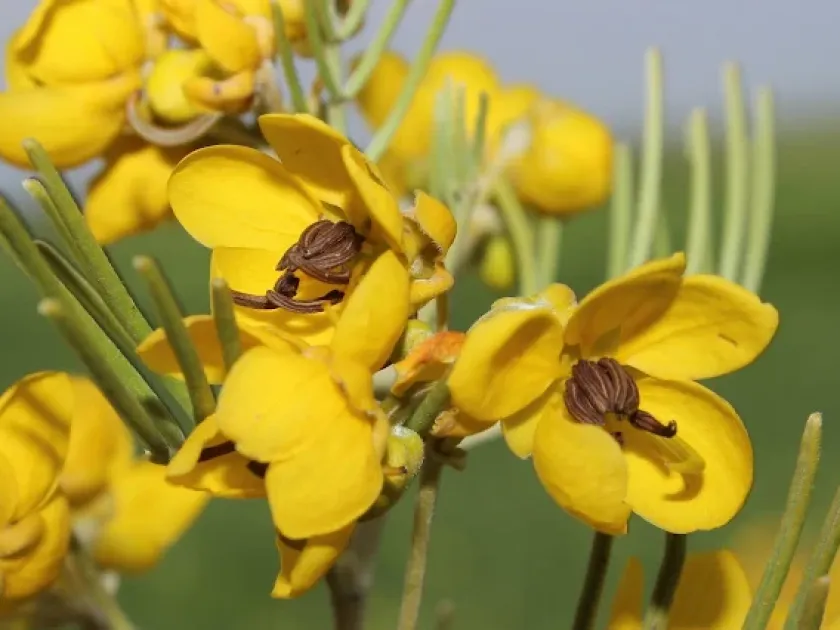
Cassia eremophila (syn. Senna eremophila) is a prominent member of the Fabaceae family, native to the arid and semi-arid zones of Australia. This evergreen shrub is highly regarded for its adaptation to harsh environments and its vibrant yellow floral display.
The plant exhibits distinctive linear foliage and a bushy growth habit, usually ranging between 1 and 3 meters in height. Its physiological structure is specifically optimized to reduce transpiration, allowing the species to flourish in regions with high solar radiation.
Environmental requirements focus primarily on excellent soil drainage and full sun exposure. It is a thermophilic plant that performs best in sandy or gravelly soils where water does not linger, preventing root hypoxia and subsequent fungal infections.
Cultivation practices should emphasize minimal moisture and deep, infrequent irrigation to encourage deep rooting. Once established, the shrub is largely self-sustaining and requires only structural pruning to maintain a desirable shape and health.
The plant serves multiple purposes, including land reclamation and erosion control. Its resilience makes it an ideal candidate for desert landscaping and sustainable gardening in regions facing increasing water scarcity.
Main diseases and pests
The most significant threat to Cassia eremophila is root rot caused by phytophthora and other soil-borne pathogens. These diseases are almost exclusively triggered by overwatering or the accumulation of water in the root zone during cool, wet seasons.
Pest issues often involve sucking insects like aphids, which can colonize the soft tips of new growth. These pests not only weaken the plant but also serve as vectors for secondary infections, necessitating prompt monitoring during the peak growing season.
Fungal leaf spots may occur in environments with high humidity or poor air circulation. To manage this, planting density must be carefully calculated to ensure adequate airflow, preventing the development of favorable conditions for fungal spore germination.
Excessive soil salinity can also negatively impact plant health, causing stunted growth and chlorosis. While the species is relatively hardy, prolonged exposure to high salt content in the irrigation water or soil can lead to physiological decline.
Successful management of these threats relies on preventative agronomy: selecting well-draining sites, avoiding overhead irrigation, and maintaining proper plant spacing to minimize stress and prevent disease outbreaks.