
Seven-year apple
Casasia clusiifolia
Description
Growing requirements
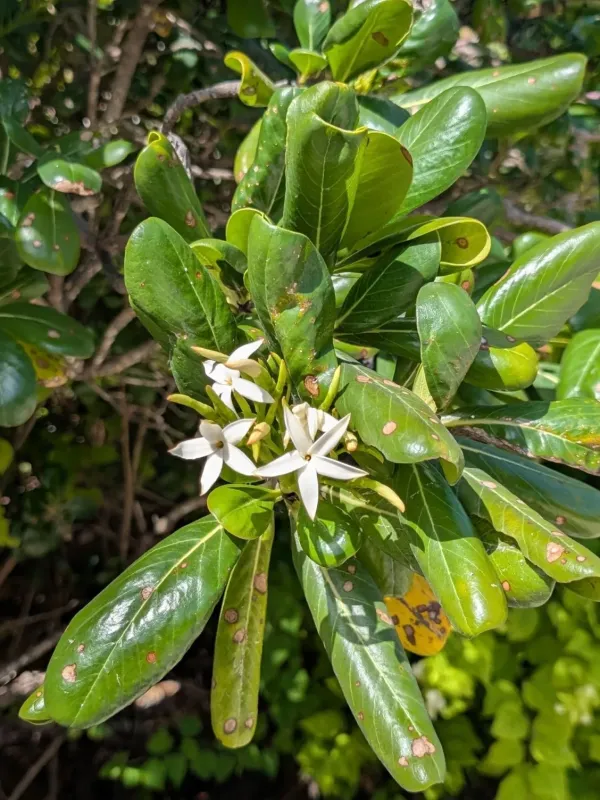
Casasia clusiifolia, popularly known as the seven-year apple, is a woody evergreen shrub or small tree belonging to the Rubiaceae family. The plant is characterized by its stiff, leathery, dark green leaves and thick, spreading branches that create a dense canopy.
Native to the coastal areas of Florida, the Caribbean, and the Bahamas, this species is highly adapted to maritime environments. It thrives in sandy, well-drained soils and is specifically noted for its remarkable tolerance to salt spray and saline soil conditions.
The plant requires full sun to partial shade for optimal growth. It is relatively drought-tolerant once established but performs best when provided with consistent moisture during the early stages of plant development, ensuring the root ball stays healthy.
Soil requirements involve a preference for neutral to slightly alkaline pH levels, mimicking its natural limestone-based habitat. Proper drainage is the single most important factor in site selection to prevent root rot in wetter climates or during intense rainy seasons.
This culture is non-frost tolerant and requires protection if temperatures drop significantly. It is best suited for coastal gardens and tropical landscapes where it can serve as a screen or hedge without the risk of winter injury.
Harvesting
The primary horticultural use of Casasia clusiifolia is in urban and coastal landscape architecture. Due to its thick foliage and salt tolerance, it is frequently planted as a windbreak or a ornamental focal point in seaside properties.
The fruit of the plant is a fleshy berry that takes a long time to ripen, which is the origin of its common name. While the pulp is edible, it is generally considered to be of low commercial value for mass consumption, often remaining on the tree as a decorative feature.
Harvesting for seed propagation involves selecting fully mature, yellowish-green fruits. Seeds should be extracted, cleaned, and sown promptly, as they generally have a moderate shelf life and respond best to fresh sowing in a warm, humid environment.
Maintenance and pruning are essential to manage the growth habit of the plant. Regular light trimming helps to maintain a dense, compact shape, especially when the species is utilized as a formal hedge in large commercial garden projects.
Typical threats include occasional infestations of scale insects or mites if the plant is grown in low-ventilation environments. Routine monitoring and the application of horticultural oils are usually sufficient to manage these pests without impacting the environment.