
Japanese spurge
Pachysandra terminalis Siebold & Zucc.
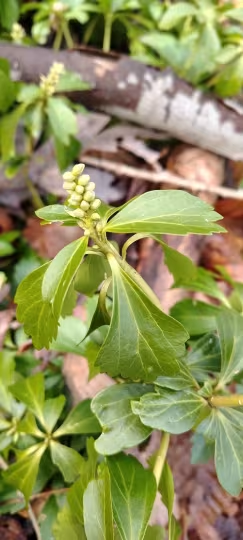
Description
Growing requirements
Pachysandra terminalis, commonly known as Japanese spurge, is an evergreen subshrub belonging to the Buxaceae family. It is native to the forests of East Asia and is highly valued for its ability to form dense, uniform mats of glossy green foliage in shaded environments.
The plant thrives in moist, well-draining, and nutrient-rich soils. It prefers an acidic to neutral soil pH. It is an excellent choice for areas under trees or on north-facing slopes where other vegetation struggles to establish due to limited sunlight and competition for nutrients.
Cultural requirements include consistent moisture, especially during the establishment phase and periods of drought. While the plant is hardy in many climates, it benefits from sheltered locations to prevent foliage desiccation during cold and windy winter months.
Maintenance is relatively low, focusing on applying organic mulch to improve soil structure and moisture retention. Periodic pruning or thinning may be beneficial in older, overgrown patches to encourage rejuvenation and maintain a tidy appearance.
This species is widely used in commercial and residential landscaping as an effective groundcover. Its habit of spreading via rhizomes makes it an ideal choice for preventing soil erosion and establishing a low-maintenance cover that suppresses opportunistic weeds.
Main diseases and pests
The most common disease affecting Japanese spurge is leaf blight, caused by fungal pathogens that thrive in overly wet or poorly ventilated conditions. Symptoms include dark brown or black lesions on the leaves, which can lead to significant foliage loss.
Slugs and snails are the primary pests that damage the plant, particularly during wet spring weather. These mollusks feed on the succulent new growth, leaving behind noticeable holes and trails that degrade the plant's decorative value.
Effective management strategies include ensuring proper spacing between plants to enhance air circulation and avoiding overhead watering in the evenings. These practices significantly reduce the humidity levels that favor fungal development.
- Monitor plantings regularly for signs of chlorosis or leaf spot.
- Use physical barriers or organic baits to control slug and snail populations.
- Prune out infected stems immediately to prevent further spread.
Overall, providing a well-drained site and avoiding overcrowding are the best preventative measures against common threats. With proper site selection, Pachysandra remains a robust and trouble-free perennial.