
Carolina jessamine
Gelsemium sempervirens (L.) J.St.-Hil
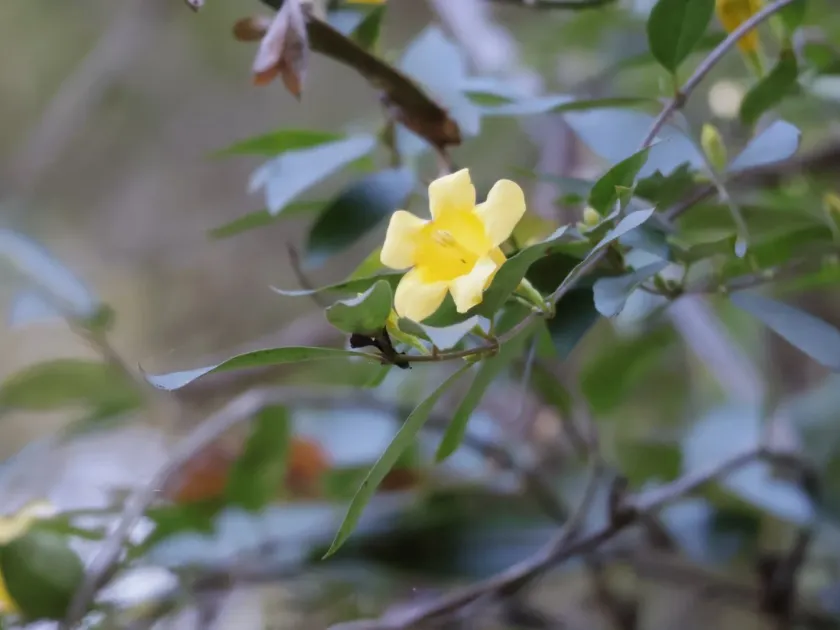
Description
Growing requirements
Carolina jessamine (Gelsemium sempervirens) is a vigorous, twining evergreen vine belonging to the Gelsemiaceae family. Native to the southeastern United States and Mexico, this plant is widely appreciated for its rapid growth and brilliant yellow, fragrant blossoms that appear in early spring.
Botanically, the plant features glossy, lanceolate dark green leaves that remain persistent throughout the year. Its stems are flexible and twine readily around supports such as trellises, arbors, and fences, making it a staple in southern landscape design for vertical coverage.
For successful cultivation, Carolina jessamine requires a location with full sun to partial shade. While it adapts to a variety of soil types, it performs best in well-drained, humus-rich, and slightly acidic soil. Good drainage is essential to prevent root rot, which the plant is highly susceptible to.
The plant thrives in moderate to warm climates and requires regular moisture during its establishment phase. Once mature, it develops moderate drought tolerance, though supplemental irrigation during extended dry spells is recommended to maintain optimal bloom quality.
Cultural practices include post-bloom pruning to maintain the desired size and shape. Pruning also helps remove dead or diseased growth, promoting vigorous new shoots and improving air circulation throughout the vine canopy.
Main diseases and pests
Carolina jessamine is considered highly toxic due to the presence of potent alkaloids throughout all parts of the plant, including the nectar. It should be planted with caution, avoiding areas accessible to children, pets, or livestock, and gloves should always be worn when handling.
Pest issues are generally minimal, but aphids and spider mites can become problematic during hot, dry weather. Monitoring the undersides of leaves and applying horticultural soaps or systemic insecticides can manage these pest populations effectively.
Fungal leaf spots and powdery mildew can occur, especially in stagnant, humid environments. Maintaining adequate spacing between plants and ensuring proper sunlight exposure are the primary cultural methods for disease prevention.
Root rot is the most serious threat, typically resulting from poor soil drainage or excessive irrigation. It is essential to ensure that the planting site does not retain standing water, particularly during the winter dormancy period.
Overall, Carolina jessamine is a relatively low-maintenance vine, but its potential toxicity and sensitivity to waterlogged soil require careful site selection and regular oversight to ensure it remains healthy and non-hazardous to its environment.