
Cardionema ramosissima
Cardionema ramosissima
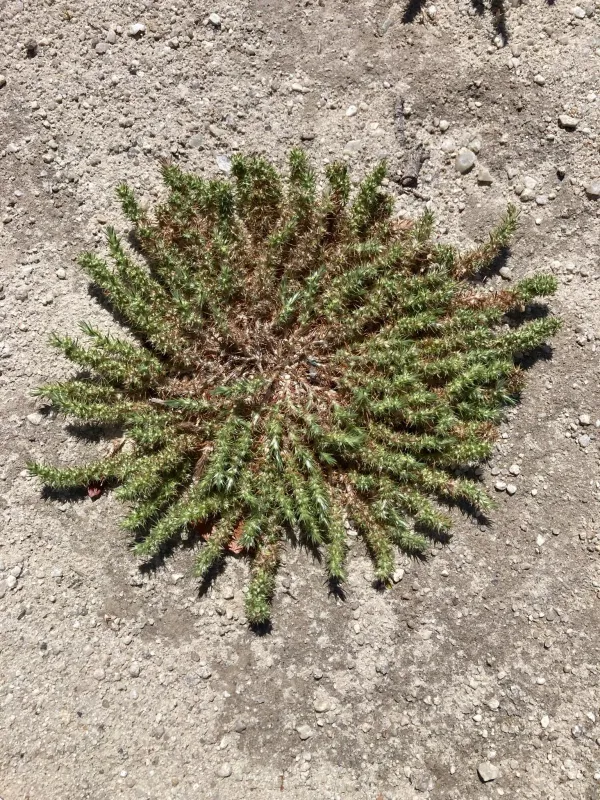
Description
Growing requirements
Cardionema ramosissima is a perennial herbaceous plant from the Caryophyllaceae family. It is recognized for its dense, mat-forming growth habit, making it an excellent candidate for stabilizing soil in arid or semi-arid environments.
The species originates from South America, thriving in rugged landscapes such as high-altitude regions and coastal sandy zones. Its evolutionary history has endowed it with remarkable physiological mechanisms to withstand extreme environmental stress.
Optimal growth requires soil that provides perfect drainage. It thrives in sandy, rocky, or gravelly substrates that discourage water stagnation. Heavy clay soils are generally unsuitable as they inhibit the necessary root aeration required by this species.
Climate adaptability is one of the plant's greatest strengths. It is highly drought-tolerant and performs well under intense solar radiation, exhibiting minimal transpiration even during the hottest periods of the summer season.
Economically, it is increasingly used in erosion control projects and xeriscaping. Its ability to create a living carpet not only prevents wind erosion but also protects soil structures from water run-off, proving its value in sustainable land management.
Main diseases and pests
The primary threat to Cardionema ramosissima is the development of root rot, typically triggered by poor drainage and excessive moisture. Prevention remains the most effective management strategy for this fungal-related problem.
Insects like spider mites may occasionally colonize the dense foliage if the plants are stressed by prolonged drought or poor airflow. Regular monitoring of the plant's interior structure is recommended to detect early signs of infestation.
High humidity combined with poor ventilation can lead to fungal outbreaks on the foliage. It is essential to plant the species in locations where natural wind movement can assist in moisture regulation.
Weed competition poses a significant threat to young plants during the establishment phase. Once the mat-forming habit is fully developed, the plant becomes highly efficient at crowding out most competing vegetation.
Chemical control must be applied with extreme caution, as the plant can be sensitive to specific herbicides. Mechanical removal of weeds is generally preferred to maintain the health and structural integrity of the plantings.