
Canthiumera glabra
Canthiumera glabra
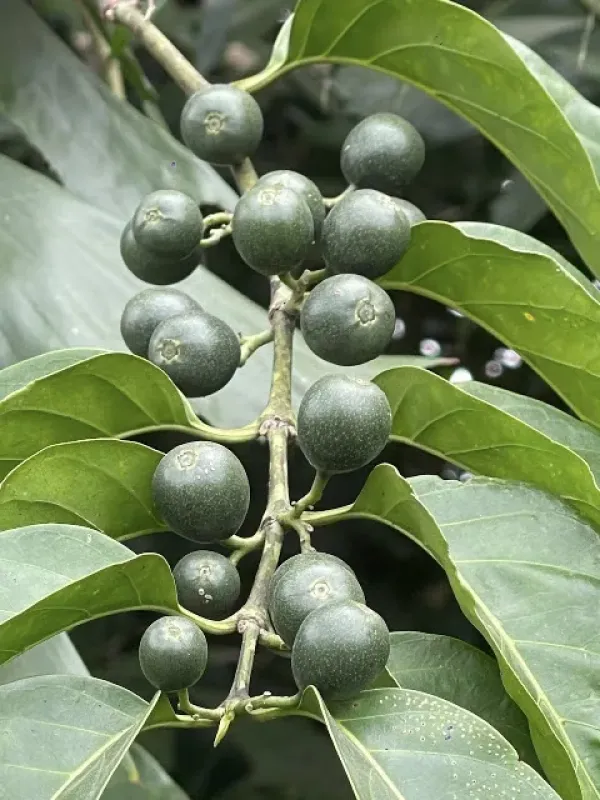
Description
Sowing dates
Canthiumera glabra is an evergreen woody plant belonging to the Rubiaceae family. In its native habitats across Southeast Asia, seeds are typically sown towards the end of the rainy season to ensure optimal moisture levels for developing seedlings.
When cultivated in specialized nurseries, seeds require preliminary stratification to improve germination energy. The optimal temperature range for initial emergence is 25–28 degrees Celsius, provided the substrate remains consistently moist.
On an industrial scale, the crop is frequently propagated via cuttings, which allows for the preservation of desirable traits from the parent plant. Young seedlings require shading for the first few months after being transplanted to their permanent growing site.
Planting density is determined by the intended use of the plantation: high-density planting is practiced for biomass production, while wider spacing of at least 3-4 meters between trees is preferred for fruit harvesting.
Site selection is crucial, as the crop requires excellent drainage; the root system of Canthiumera is highly sensitive to waterlogging and oxygen deficiency in the rhizosphere.
Growing requirements
As a tropical plant, this species has strict requirements for heat. It does not tolerate rapid temperature fluctuations and cannot survive even brief periods of sub-zero temperatures.
Successful cultivation necessitates fertile, well-drained soils with a near-neutral pH. Red soils and alluvial deposits rich in organic matter are ideal for healthy growth.
The plant prefers areas with filtered sunlight. Direct, intense exposure during midday hours can cause leaf scorching, which is why partial shading techniques are commonly employed in agricultural systems.
Air humidity plays a vital role in physiological processes, with a level of 75–85 percent being considered optimal. Drip irrigation is essential during dry spells to maintain consistent development.
Wind protection is another key requirement, as strong gusts can damage fragile young shoots and reduce the overall productivity of the trees during active vegetation periods.
Yield
The yield of Canthiumera glabra depends on the age of the plantation and the level of management. On average, industrial plantations reach stable fruit production 4–5 years after transplantation.
The crop's biological potential allows for multiple harvests per year, provided there is a uniform distribution of rainfall or sufficient supplementary irrigation. Total yield volume is directly correlated with balanced mineral fertilization.
Average productivity per hectare varies depending on planting density and the specific agro-climatic zone. In optimal conditions, a single mature tree can produce up to 15-20 kg of fruit or fresh biomass per season.
To increase yields, pruning is recommended to stimulate the growth of fruit-bearing branches and improve light penetration into the center of the tree canopy.
Harvest accounting is based on the weight of gathered fruits or young shoots, which are utilized in the pharmaceutical industry and traditional medicine for extract production.
Main diseases and pests
The primary threats to this crop are fungal diseases of the root system caused by soil waterlogging. Development of root rot leads to rapid wilting and plant death.
Pests such as spider mites and various aphid species frequently attack young leaf blades, depleting sap and hindering overall development. Biological control methods are typically applied to manage these populations.
Disease prevention relies on regular inspection of trees, removal of affected fragments, and maintaining high agricultural standards in the inter-row spaces.
Harvesting
Harvesting Canthiumera glabra is performed exclusively by hand, as both the fruits and plant tissues require careful handling to maintain quality and market value.
The timing of the harvest is determined by observing changes in fruit color and texture. Depending on the intended end-use (medicinal or food processing), the required maturity level may vary.
Following harvest, raw material undergoes primary processing, including sorting and cleaning of debris. Rapid transport to processing facilities is crucial to avoid fermentation and the loss of bioactive compounds.
Drying of the plant material should occur in the shade with good ventilation, which helps preserve essential oils and other volatile compounds that contribute to the crop's value.
Storage of finished products requires strict adherence to temperature and humidity controls in specialized facilities protected from direct sunlight and pests.