
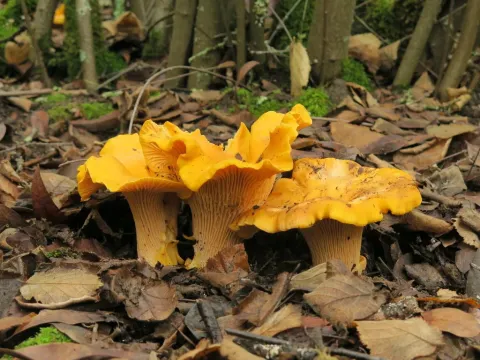
Chanterelle
Cantharellus
The Chanterelle (Cantharellus cibarius) belongs to the Cantharellaceae family. It is a mycorrhizal fungus, meaning it maintains a symbiotic relationship with the root systems of various tree species, such as pine, spruce, oak, and beech.
What the section contains

Chanterelle
The native distribution covers vast forest areas across Eurasia and North America. Due to the complex nature of its mycorrhizal symbiosis, large-scale industrial cultivation remains a significant challenge, making wild harvesting the primary source for the global market.
Reproduction occurs through spores spread by wind, insects, and animals. The mycelium develops in the soil over many years, gradually colonizing the root zone of host trees to exchange nutrients and carbohydrates necessary for the fungus's lifecycle.
The development of the mycelium requires a stable forest ecosystem with moderate moisture and the absence of deep soil freezing. Conservation of the forest floor is vital, as any disruption to the soil structure can hinder the expansion of the fungal network.
Attempts at domestic or agricultural "seeding" of Chanterelles are often unsuccessful because the fungus requires a well-established tree host to thrive, which prevents widespread implementation in conventional farming systems.
Chanterelles are sensitive to soil acidity and thrive in acidic substrates with a pH ranging from 4.0 to 5.5. Optimal soil types are loamy or sandy soils, which are rich in organic humus, facilitating proper mycelial development.
Water management is a critical factor for productivity. The mushroom is highly sensitive to drought, which can pause the formation of fruiting bodies. Conversely, excessive waterlogging suppresses mycelial respiration and leads to decay.
The temperature range for optimal fruiting body formation is between 15 and 22 degrees Celsius. High humidity in the near-ground atmosphere, typically around 70-80 percent, is necessary during the growing season to prevent premature drying.
Soil aeration is essential for gas exchange. Compacted soils, often caused by heavy foot traffic or machinery, significantly inhibit the growth of the fungal network and reduce the density of the mushroom population in specific areas.
The mushrooms prefer partially shaded areas. Direct sunlight can dehydrate the forest floor, which is detrimental to the young primordia, making the edges of mixed forests with dappled light the most productive harvesting sites.
The yield of Chanterelles is characterized by a strong cyclical nature, heavily influenced by seasonal weather patterns. In favorable years with consistent rainfall, productivity can reach significant quantities per hectare within established mushroom patches.
Fruiting occurs in "waves" following periods of heavy rain and subsequent soil warming. Experienced gatherers monitor weather patterns closely, as the timing of the fruiting cycle is highly predictable based on precipitation and humidity levels.
A biological advantage of the Chanterelle is its ability to enter a state of dormancy during dry seasons. The mycelium remains viable, preserving its reproductive potential until the environment offers the necessary conditions for fruiting again.
Unlike many saprotrophic mushrooms, Chanterelles are rarely infested by insect larvae, which ensures a high percentage of harvestable, top-quality produce, thereby increasing the economic return for collectors and harvesters.
Sustainable harvesting practices, such as leaving smaller mushrooms to mature and avoiding damage to the soil structure, are key to maintaining long-term yields within a specific forest area for future seasons.
The most significant threat to Chanterelle populations is the alteration of forest hydrology. Land drainage or the destruction of wetland areas often leads to the death of the mycorrhiza, causing the permanent disappearance of the fungus.
Chemical contamination, including the runoff of agricultural pesticides into forest ecosystems, is hazardous. Chanterelles are known as bioaccumulators and can absorb heavy metals from the soil, making them unsafe for consumption in polluted regions.
Deforestation and the removal of host trees destroy the primary food source for the mycelium. Without the sugar exchanges from the tree root system, the mycelial network dies rapidly, leading to the collapse of the local population.
While the mushrooms are generally resistant, they can be affected by specific fungal pathogens such as Hypomyces chrysospermus. These parasitic fungi can turn the fruiting bodies into an unmarketable, decayed mass under poor conditions.
Excessive human activity, such as trampling, compacts the soil and damages the delicate mycelium network near the surface. This negatively impacts the oxygen levels and reduces the ability of the fungus to produce fruiting bodies in subsequent years.
Harvesting is performed exclusively by hand. Using a sharp knife to cut the stem of the mushroom is recommended to keep the soil and mycelium intact, ensuring the area remains productive for future harvesting cycles.
The best practice is to harvest during the early morning hours when the mushrooms contain the highest level of moisture and maintain their characteristic firmness. Proper sorting during the collection phase is essential for commercial market preparation.
Logistics for transport require ventilated containers to prevent the buildup of heat and moisture, which could degrade the product. Because of their firm texture, Chanterelles are more durable and travel better than most other wild mushroom varieties.
For long-term storage, the mushrooms can be dried, frozen, or pickled. Freezing is the preferred method for many processors, as the Chanterelle retains its dense texture and rich, nutty flavor even after thawing.
Commercial harvesting requires efficient supply chain management to move the fresh product from the forest to the processing facility quickly. This speed ensures freshness and minimizes post-harvest losses, delivering a high-quality product to the consumer.