
Golden chanterelle
Cantharellus cibarius Fr.
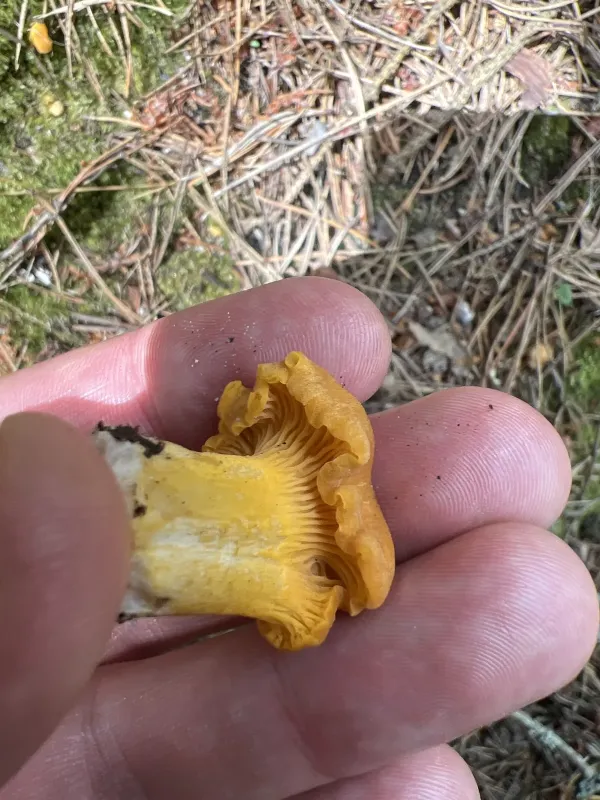
Description
Growing requirements
The golden chanterelle (Cantharellus cibarius) is a member of the Cantharellaceae family. It is a strictly mycorrhizal fungus, forming a symbiotic relationship with the roots of various tree species, such as oak, beech, pine, and spruce.
Cultivation of this species presents a significant agronomic challenge as it cannot be grown on standard artificial composts or wood-based substrates like other commercial mushrooms.
The fungus requires specific ecological conditions, including acidic soils rich in organic matter and a stable microclimate provided by the tree canopy, which regulates soil temperature and humidity.
Agricultural efforts to propagate chanterelles must focus on establishing a symbiotic partnership between the fungal mycelium and the root systems of young, host-compatible trees.
Environmental stability is crucial; any disruption to the soil profile or the host tree's health directly impacts the development and long-term viability of the mycelial network.
Main diseases and pests
Chanterelles are naturally resistant to many pests and diseases, which is often attributed to the presence of specific chitin-degrading enzymes and complex carbohydrates in their fruiting bodies.
Extreme climate fluctuations, particularly prolonged droughts, are the most significant threat to chanterelle productivity, leading to the dormancy of the fungal network.
Human impact, such as soil compaction and air pollution, can negatively influence the symbiotic exchange between the fungi and the tree roots, reducing yields.
While chanterelles are less prone to insect damage than other species, certain larvae can still inhabit the stem in high-humidity seasons, necessitating quality control during collection.
The conservation of the surrounding ecosystem, including leaf litter and root health, is the primary defense against the decline of a chanterelle site.
Harvesting
Harvesting of golden chanterelles occurs from early summer through late autumn, typically following significant precipitation events that trigger the growth of the fruiting bodies.
Collectors must be careful to lift or twist the mushrooms out of the ground to avoid harming the underlying mycelium, which is essential for future yields.
Proper post-harvest handling is critical, as chanterelles are highly perishable and require immediate sorting to remove debris and damaged specimens.
Marketable mushrooms are categorized by size and cleanliness, then transported in aerated containers to prevent bacterial degradation and moisture buildup.
Commercial utilization spans from fresh sales in gourmet markets to preservation methods such as flash-freezing, drying, and brining to extend shelf life.