
Canotia holacantha
Canotia holacantha
Description
Growing requirements
Canotia holacantha, commonly known as the crucifixion thorn, is a distinct species within the Celastraceae family. It is a long-lived, woody shrub that exhibits remarkable physiological adaptations to extreme desert environments.
The plant originates from the arid regions of the Southwestern United States, specifically thriving in the high desert habitats of Arizona. Its evolutionary history has resulted in a unique structure designed to conserve water at all costs.
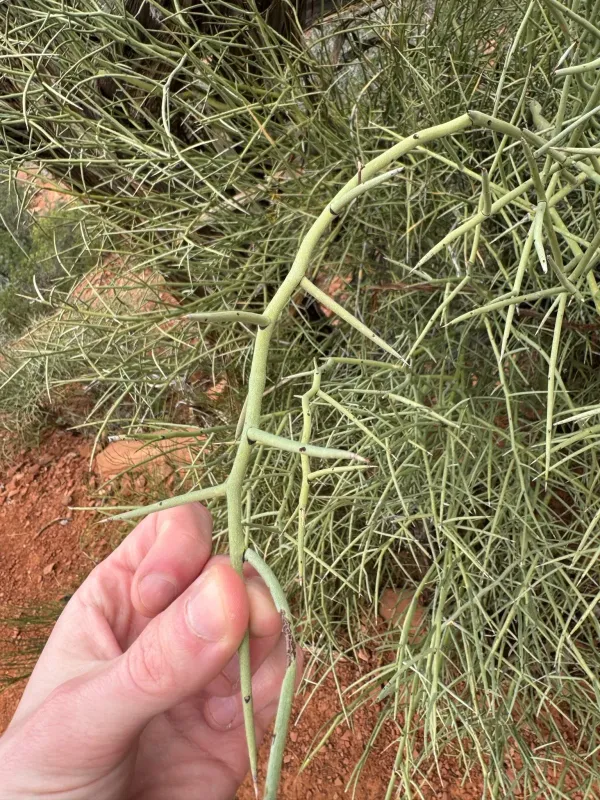
Botanically, the plant is characterized by its reduced leaves and green, photosynthetic stems. This strategy minimizes surface area for transpiration while maintaining the capacity for carbon fixation even in the absence of traditional foliage.
For successful growth, this species requires porous, well-draining soil, ideally of a rocky or sandy composition. It is obligately photophilic, meaning it demands full solar exposure and performs poorly in low-light environments.
Agronomic management of this plant focuses on mimicking its natural niche. It does not require fertilization and should be protected from stagnant moisture, as the roots are highly susceptible to rot if soil aeration is compromised.
Main diseases and pests
Canotia holacantha is notably resistant to most common agricultural pests due to its tough, thorny exterior and specialized metabolism. Its physiological defenses effectively deter typical herbivores and foliage-eating insects found in desert ecosystems.
The primary threats to this plant are soil-borne pathogens related to waterlogging. Excessive irrigation or poor drainage in a cultivation setting can lead to root degradation, which is often the only significant biological risk to established shrubs.