
Hybrid trumpet vine
Campsis hybrids
Description
Growing requirements
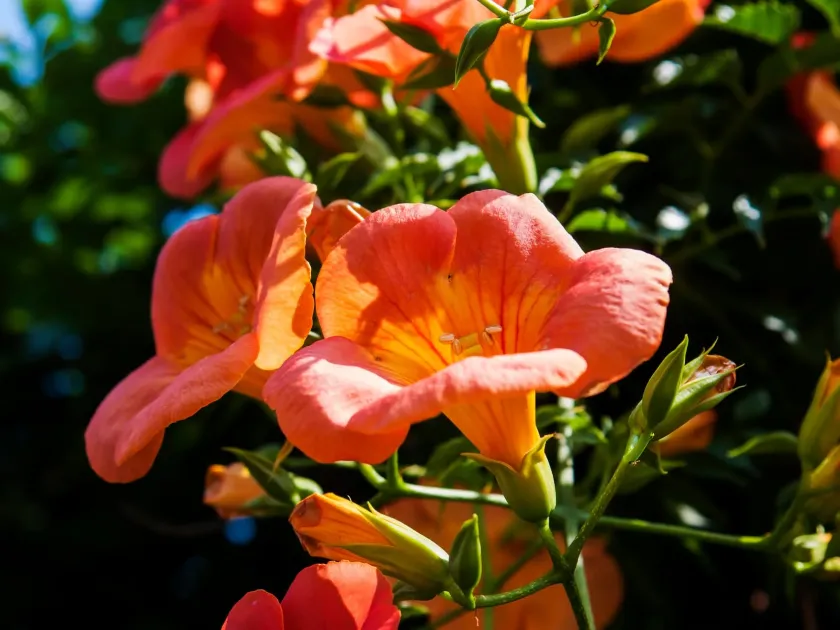
Hybrid trumpet vine, botanically known as Campsis × tagliabuana, belongs to the Bignoniaceae family and is a robust deciduous climbing shrub. It is a result of cross-breeding Campsis radicans and Campsis grandiflora, combining cold hardiness with exceptional flower size.
The plant thrives in full sun exposure, which is essential for healthy foliage development and prolific flowering. It prefers locations where it can climb freely, such as sturdy trellises, fences, or walls, provided it has enough space to accommodate its vigorous growth habit.
Soil preferences lean towards deep, fertile, and well-draining substrates. While the hybrid is adaptable to different soil textures, it performs best in slightly acidic or neutral conditions that retain moderate moisture without becoming waterlogged, which is vital for root health.
Cultivation practices focus on structural training and heavy pruning. Since the plant flowers on new wood, pruning the previous season's growth in early spring is necessary to encourage a strong framework and ensure a massive display of trumpet-shaped blooms during the summer.
Economically and ornamentally, this plant is used primarily for large-scale landscaping. It serves as an effective vertical screen and a rapid-growing cover for unsightly structures, adding significant aesthetic value to gardens and public park areas with minimal long-term maintenance.
Main diseases and pests
Aphids represent the most common pest challenge for the hybrid trumpet vine. These small insects tend to cluster on soft, new growth, draining the plant's sap and potentially causing stunted development or foliage curling if infestations remain unchecked during warm spells.
Fungal issues, such as powdery mildew, may occur during periods of high humidity or poor air circulation. This appears as a greyish-white coating on leaves, which, if not managed, interferes with photosynthetic processes and reduces the plant's overall vigor.
Root rot is a critical concern, especially in areas with poor soil drainage or excessive irrigation. Ensuring that the planting site has adequate slope or a dedicated drainage system is the most effective preventative measure against this systemic health threat.
Management strategies involve integrated pest control, including the application of organic soaps or systemic insecticides when necessary. Regularly thinning out the vine structure promotes better airflow, which inherently reduces the probability of fungal pathogen outbreaks.
Maintaining plant health also requires keeping the base clear of dense weeds or debris. By ensuring a well-ventilated and clean environment around the root crown, the gardener significantly improves the vine’s resilience against typical nursery and garden-borne threats.