
Campsidium valdivianum
Campsidium valdivianum
Description
Growing requirements
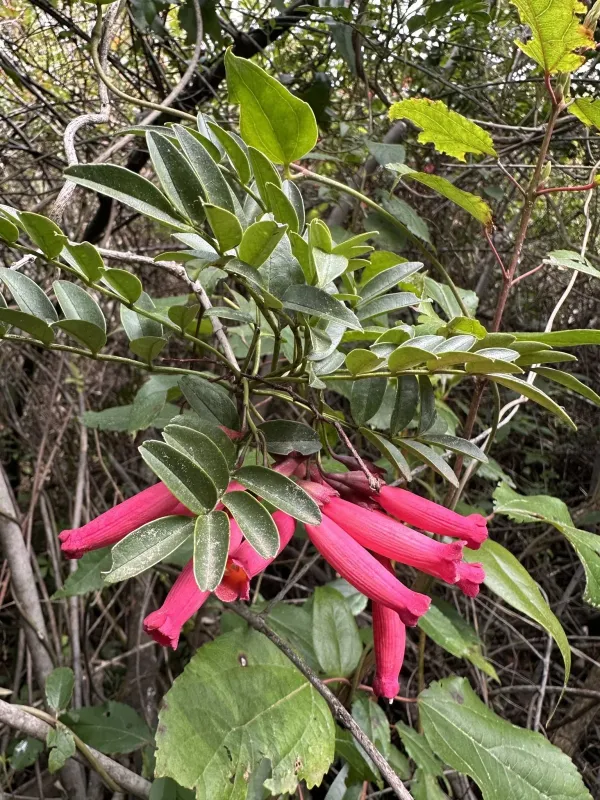
Campsidium valdivianum is a woody, evergreen vine belonging to the Bignoniaceae family. Originating from the temperate rainforests of Chile and Argentina, this plant is highly regarded for its vigorous climbing habit and lush, compound foliage, which can display significant variations in leaf shape depending on the plant's maturity.
The botanical structure of the vine includes flexible stems equipped with adventitious roots that allow it to scale vertical surfaces effectively. This characteristic makes it an exceptional choice for covering walls, trellises, and other architectural structures in warm-temperate garden environments.
In terms of climatic requirements, the plant thrives in mild conditions without extreme temperature fluctuations. While it can tolerate moderate coolness, it is essentially a frost-tender species, meaning that in regions with harsh winters, it must be housed in conservatories or greenhouses to survive and maintain its evergreen appeal.
Proper soil management is critical for the success of this crop. A fertile, well-draining substrate with a slightly acidic to neutral pH is ideal for promoting healthy growth. Consistent moisture is necessary for the root system, but growers must avoid waterlogging, which can rapidly lead to root decay and overall plant decline.
Agricultural and horticultural use is primarily focused on ornamental purposes. Beyond its aesthetic value in landscape design, the plant serves as an efficient tool for vertical greening, providing shade and wind protection when trained properly over structural supports, contributing to sustainable urban garden solutions.
Main diseases and pests
The primary pests affecting Campsidium valdivianum, particularly when grown in sheltered or indoor environments, include spider mites and mealybugs. These pests thrive in dry air, so maintaining appropriate humidity levels and inspecting the foliage regularly for signs of infestation is essential for effective integrated pest management.
Pathological threats are generally related to improper cultural practices, specifically excessive soil moisture which fosters fungal infections. Root rot caused by poor drainage remains the most significant threat to the plant's health, often requiring the immediate adjustment of irrigation schedules and improvement of soil porosity to prevent loss.