
Camonea vitifolia
Camonea vitifolia
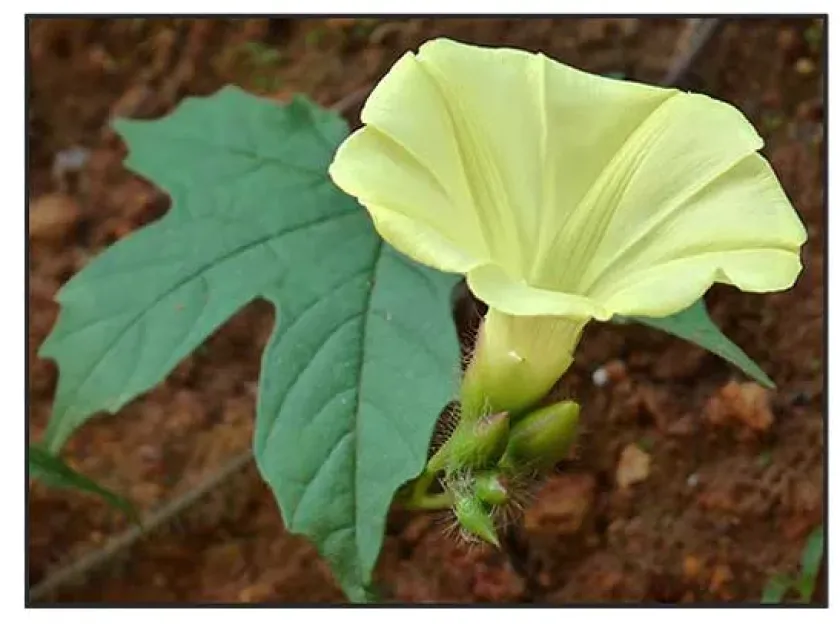
Description
Growing requirements
Camonea vitifolia is a herbaceous climbing plant belonging to the Convolvulaceae family. The species is characterized by its distinct foliage that closely resembles that of a grapevine, which justifies its specific scientific name.
Native to tropical climates, this plant thrives in warm, humid conditions. It is extremely sensitive to frost, which limits its outdoor cultivation to frost-free regions or controlled environment agriculture such as greenhouses.
The plant requires well-drained, nutrient-rich soil to support its rapid growth habit. Maintaining an appropriate soil pH, typically neutral to slightly acidic, is essential for optimal nutrient uptake.
Agrotechnical practices involve providing sturdy vertical trellises or supports. Proper pruning is necessary to manage the vigorous vegetative growth and to promote better airflow throughout the canopy.
The primary use of Camonea vitifolia is ornamental, serving as a decorative climber for walls, fences, and garden structures. In some regions, its biological properties are studied for potential phytotherapeutic applications.
Main diseases and pests
Spider mites are the most common pests affecting this plant, especially when indoor humidity levels are allowed to drop below optimal ranges for extended periods.
Root rot caused by overwatering or poor drainage is a frequent threat that can compromise the health of the entire plant structure quite rapidly.
Powdery mildew may occur if the planting site lacks sufficient air circulation or if the foliage remains wet for too long during low-temperature periods.
Aphids can infest the tender terminal buds of the vines, potentially stunting growth and acting as vectors for various plant viruses.
To ensure healthy growth, regular monitoring of the underside of the leaves and maintaining a consistent fertilization schedule to avoid nutrient deficiencies is highly recommended.