
Willow-leaved camellia
Camellia salicifolia
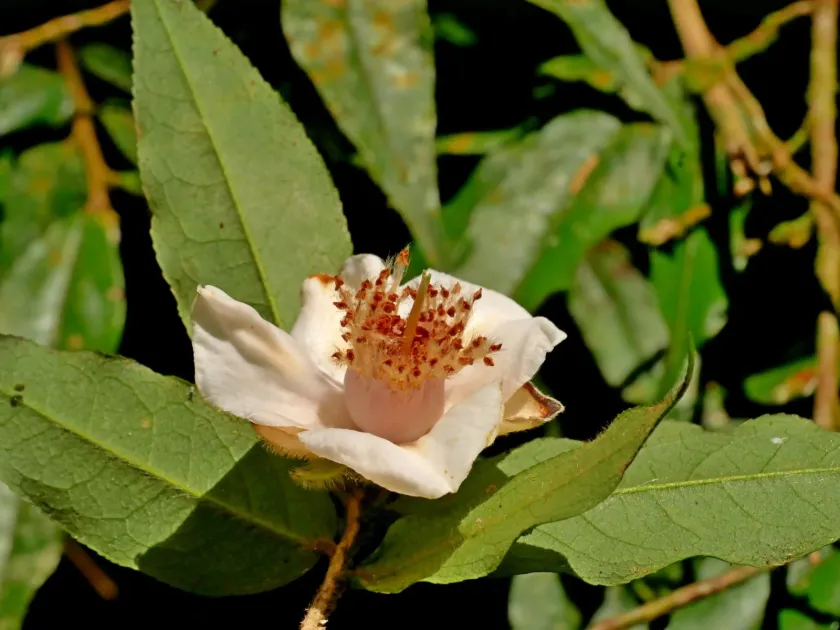
Description
Growing requirements
Willow-leaved camellia (Camellia salicifolia) is a distinctive evergreen shrub within the Theaceae family. It originates from the subtropical forests of China and is characterized by its narrow, willow-like leaves that set it apart from other common camellia varieties.
The plant requires acidic, well-draining soil rich in organic matter to thrive. An optimal pH range for this species is between 5.0 and 6.0. Soil compaction or waterlogging should be avoided at all costs, as these conditions rapidly damage the plant's delicate root system.
In terms of climate, Camellia salicifolia prefers mild, humid environments with protection from strong winds and direct afternoon sun. It performs best in partial shade, mimicking the natural conditions of a forest understory where light is filtered and moisture levels remain consistent.
Agricultural management requires regular irrigation with soft water, as tap water containing high levels of calcium carbonate can negatively impact the plant's vitality. Fertilization with specialized acid-loving plant formulas should be applied during the active growing season.
The primary use of this plant is ornamental, favored for its graceful foliage and aesthetic appeal in botanical collections and high-end landscaping. It serves as an excellent specimen for container gardening in temperate climates or indoor winter gardens.
Main diseases and pests
Root rot is the most significant health threat for the willow-leaved camellia, often caused by overwatering or poor soil drainage. Maintaining a proper irrigation schedule is the most effective preventative measure against fungal complications.
Pests such as scale insects and mealybugs can pose a significant challenge. These insects tend to hide along stems and leaf axils, making early detection difficult. Regular inspection of the foliage is essential for early intervention.
Spider mites are another common issue in arid indoor conditions. Increasing humidity around the plant and maintaining good airflow are standard cultural practices used to prevent mite infestations and keep the foliage healthy.
General maintenance should include the removal of dead or crossing branches to improve canopy ventilation. This process helps minimize humidity traps that encourage the growth of pathogenic fungi and other microorganisms.
- Maintain soil acidity.
- Avoid excessive moisture in the root zone.
- Monitor for sap-sucking pests.
- Provide filtered sunlight.