
Calypso bulbosa
Calypso bulbosa
Description
Growing requirements
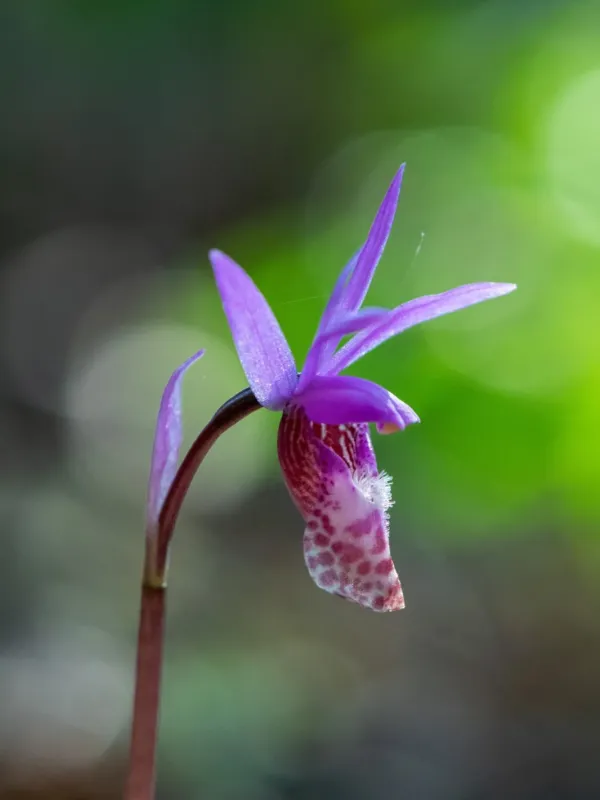
Calypso bulbosa, commonly known as the fairy slipper, belongs to the Orchidaceae family. It is a diminutive perennial herb characterized by a single corm, one leaf, and a distinctively shaped flower, widely distributed across northern hemisphere boreal forests.
The plant has highly specialized ecological requirements, thriving primarily in mature coniferous forests with deep, mossy, and stable humus layers. Its survival is strictly dependent on a mycorrhizal association with fungi in the soil, which provides the necessary nutrients for its slow growth.
Morphologically, Calypso bulbosa exhibits a single, broad leaf that emerges in autumn and persists through winter. The blooming season occurs in late spring, producing a delicate, fragrant flower that requires specific insect pollinators, primarily bumblebees, to successfully complete its reproductive cycle.
Agricultural cultivation of Calypso bulbosa is not viable or practiced. The species cannot be domesticated in traditional farm settings because it requires a precise fungal symbiosis and a stable, undisturbed forest floor climate to survive beyond the seedling stage.
As a highly sensitive botanical species, it serves as a bioindicator for forest ecosystem health. Conservation efforts are focused on protecting its natural habitat, as any human activity such as soil compaction or drainage can permanently eradicate local populations of this orchid.
Main diseases and pests
Primary threats to Calypso bulbosa include habitat loss due to logging, land development, and climate-driven shifts in forest humidity. The plant's reliance on specific soil moisture levels makes it exceptionally vulnerable to drought conditions and changing precipitation patterns.
Invasive plant species and excessive browsing by deer populations also present significant threats to the survival of the orchid in many regions. Furthermore, the illegal collection of plants by enthusiasts remains a critical risk, as transplanted individuals rarely survive long without their native soil environment.