
Incense cedar
Calocedrus decurrens (Torr.) Florin
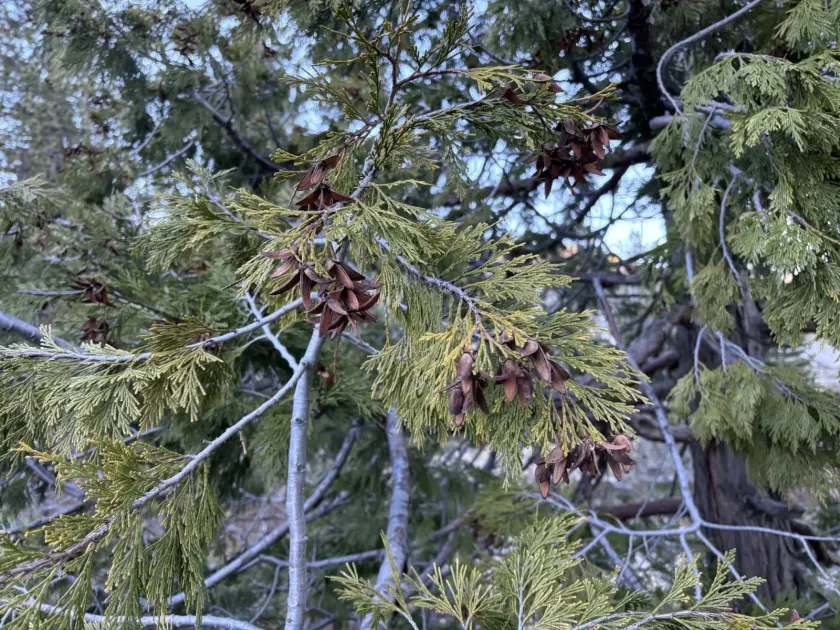
Description
Growing requirements
Calocedrus decurrens, commonly known as the Incense cedar, is a significant member of the Cupressaceae family. This evergreen conifer is highly regarded for its narrow, columnar habit and aromatic, scale-like leaves.
The species originates from western North America, specifically thriving in the mountains of California and Oregon. It is well-adapted to mountain climates, characterized by cool, wet winters and warm, dry summers.
In terms of soil, this culture requires deep, fertile, and well-drained substrates. While it can tolerate various soil types, it performs best in soils with slightly acidic to neutral pH levels, avoiding stagnant water conditions.
Exposure to full sun or light shade is ideal for this tree. In open areas, it maintains its signature vertical shape, whereas in shaded environments, the crown may become less dense over time.
Maintenance involves mulch application to retain soil moisture and regulate temperature. Young trees require supplemental watering during dry spells until they become firmly established in their environment.
Yield
The primary economic use of Calocedrus decurrens is in ornamental landscaping, where it serves as a stunning vertical accent. It is commonly planted in large gardens, formal parks, and along wide avenues.
Its timber is highly valued in industry due to its decay resistance and stability. Historically, the wood has been the preferred material for high-quality pencil production, as well as for light carpentry and woodworking.
In forestry, the species is grown for sustainable timber production. It is a slow-growing tree in its youth, which allows for structural wood development that is sought after for specific industrial applications.
The longevity of the Incense cedar is remarkable; specimens can live for hundreds of years. This long-term growth potential makes it a reliable choice for estate plantings and reforestation projects.
Propagation is mostly achieved through seeds. Seedlings must be handled with care to ensure the development of a healthy root system, which is crucial for the tree's eventual resilience against environmental stressors.
Main diseases and pests
Pests such as scale insects and aphids can occasionally infest the foliage, leading to discoloration and stunted growth. Integrated pest management strategies are recommended to keep populations in check.
Root rot, specifically caused by Phytophthora species, can affect the tree if the planting site lacks proper drainage. Ensuring good soil aeration is the most effective preventative measure against this threat.
Winter sunscald and frost damage on young branches can be a problem in colder regions. Providing temporary protection during the first few years of growth can help the tree adapt to local conditions.
Fungal pathogens causing shoot blight may occur in humid, stagnant conditions. Sanitation, such as removing fallen needles and pruning infected branches, helps reduce the spread of these pathogens.
- Monitor for signs of pest infestations regularly.
- Apply fungicides only if a specific disease is confirmed.
- Protect young bark from rodent damage.