
Calepina irregularis
Calepina irregularis
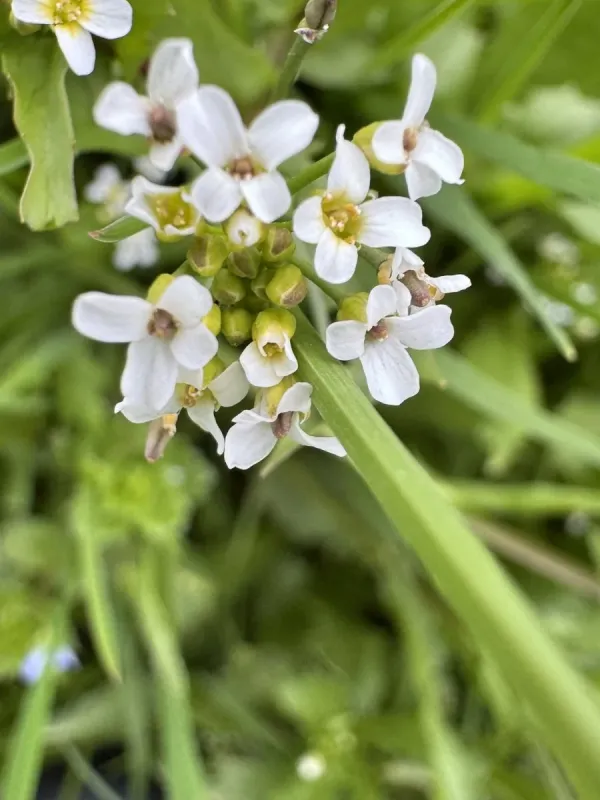
Description
Sowing dates
Calepina irregularis is primarily a winter annual weed, though it can behave as a wintering species depending on the local climate. Germination is most active during the autumn months when soil moisture levels are optimal following initial rainfall.
The plant exhibits rapid growth during early spring, leveraging its ability to photosynthesize at low positive temperatures. This allows it to establish quickly before the main crop canopy fully closes, creating significant competition for nutrients.
Flowering usually occurs from late spring through early summer. The seeds are produced in large quantities and are known for their ability to remain viable in the soil seed bank for several seasons, making long-term control challenging.
Seeds can germinate from various depths in the soil, often up to 5 centimeters. This adaptability makes shallow mechanical cultivation less effective as a standalone method for controlling the population of this specific weed.
Seedlings emerge unevenly throughout the season, which is a key adaptation for the species. This variability ensures that at least a portion of the population will survive even if weather conditions are unfavorable during initial emergence.
Growing requirements
As a member of the Brassicaceae family, Calepina irregularis prefers open, sunny locations with adequate light availability. It is highly adaptable and can be found growing in diverse soil types, ranging from light loams to heavy clay.
The plant thrives under moderate moisture conditions but is capable of surviving short periods of drought due to its relatively deep and branched root system. It is particularly competitive on soils with high nitrogen availability.
Agronomic management requires a strategic crop rotation that includes non-Brassicaceae crops to disrupt the weed's life cycle. Reducing the time that the soil remains bare is a critical step in preventing the establishment of new plants.
Mechanical control, such as inter-row cultivation in row crops, is highly effective if performed early. However, as the plant matures, its stem strength and deep roots make it more resistant to light mechanical disturbances.
Soil pH does not strictly limit its distribution, although it tends to show slightly higher vigor on neutral to alkaline soils. Understanding these environmental preferences is key for precision agriculture and weed scouting.
Main diseases and pests
The main agricultural threat posed by this weed is its role as a host for pathogens that affect commercial crops. It can serve as a reservoir for clubroot, downy mildew, and various viruses that reduce the yield of canola or mustard.
Pests such as flea beetles and aphids are frequently found on this plant. These insects often migrate from the weeds to nearby crops, causing early-season damage that can be devastating for seedlings and young plants.
Effective management requires the use of herbicides, particularly those targeted at dicotyledonous weeds. Applications are most effective when the weed is in the rosette stage, prior to the bolting and flowering phases.
Biological control options are currently limited, making integrated pest management (IPM) the most sustainable approach. Monitoring programs should focus on field margins and uncultivated areas where the weed often establishes its first colonies.
Regular sanitation of equipment is also recommended to prevent the accidental spread of seeds between fields. By combining chemical, cultural, and preventive measures, farmers can successfully mitigate the impact of this plant.