
Caldesia parnassifolia
Caldesia parnassifolia
Description
Growing requirements
Caldesia parnassifolia is a rare perennial aquatic plant belonging to the Alismataceae family. It typically thrives in shallow freshwater environments such as marshes, ponds, and slow-moving river oxbows.
The plant grows anchored in muddy or peaty substrates at the bottom of the water body. Its physiological survival depends on constant water levels, as it is highly intolerant to dehydration during the growing season.
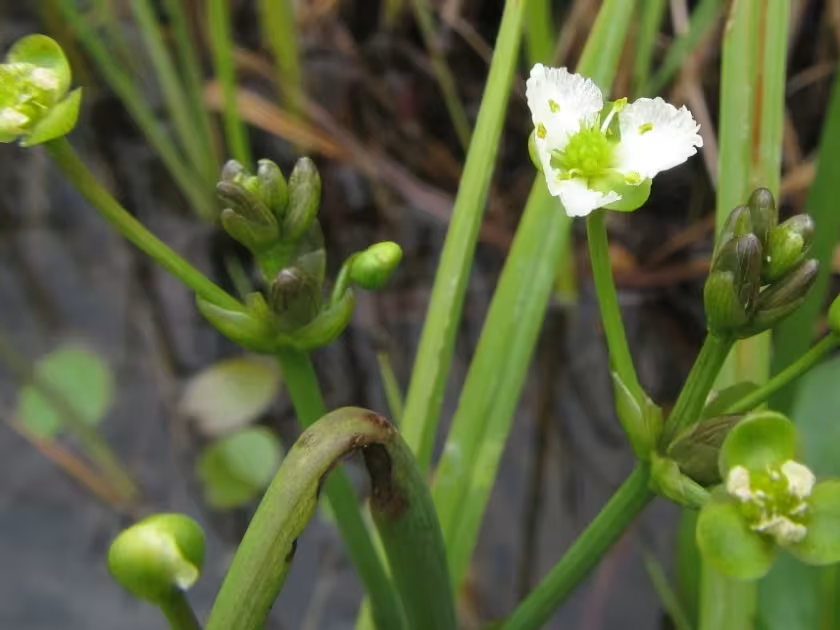
Botanically, it features heart-shaped leaves that often float on the surface, attached to long petioles. The plant produces delicate inflorescences that emerge above the water, marking its reproductive phase within the aquatic environment.
Climatic requirements involve temperate to tropical zones, with a necessity for clean water and high light intensity. It is highly sensitive to changes in water chemistry and struggles to survive in turbid or polluted aquatic environments.
In terms of use, Caldesia parnassifolia serves primarily as an important component of natural wetlands. Its presence supports local biodiversity and helps maintain the ecological health of the aquatic ecosystem, making it a subject of conservation interest.
Main diseases and pests
The main threats to this species include habitat loss caused by land reclamation, drainage of wetlands, and large-scale agricultural infrastructure projects.
Eutrophication of water bodies, often caused by fertilizer runoff from nearby farms, promotes the growth of competitive algal blooms that smother the plant.
Insect pests such as leaf-eating beetles and aquatic larvae can cause significant damage to the foliage during the active growth period, reducing photosynthetic capacity.
Fungal infections are common in stagnant water conditions, especially when high temperatures promote the rapid spread of spores among the sensitive aquatic vegetation.
Human interference with river flow regulation and dam construction remains the most significant long-term threat to the stability of existing wild populations.