
Calathea lietzei
Calathea lietzei E. Morren
Description
Growing requirements
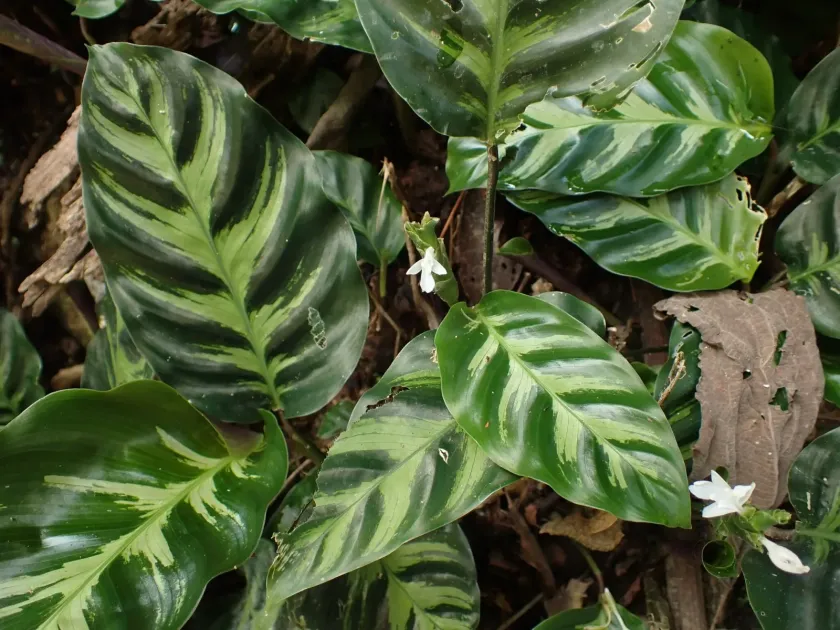
Calathea lietzei is an ornamental perennial plant belonging to the Marantaceae family. Originating from the tropical rainforests of Brazil, this species is highly valued for its decorative variegated foliage.
The crop requires a stable temperature range between 20°C and 25°C to maintain active growth. It is strictly recommended to avoid exposure to cold drafts, as the plant is susceptible to thermal shock.
The ideal soil substrate should be loose, organic-rich, and slightly acidic. A mix of peat, leaf mold, and perlite or coarse sand provides the necessary aeration and moisture retention for the root system.
Humidity management is critical for Calathea lietzei, requiring relative air humidity levels above 70%. Low humidity leads to brown leaf margins and decreased ornamental quality of the crop.
Lighting conditions should be filtered or diffused light. Direct sunlight is detrimental to the plant, causing leaf scorch and bleaching the natural patterns on the leaves.
Main diseases and pests
The most common pests affecting Calathea lietzei include spider mites, scale insects, and mealybugs. These organisms thrive in dry environments and often attack the undersides of the leaves.
Root rot is a significant pathological threat, usually triggered by poor soil drainage or over-irrigation in low-light, cool conditions which prevent the substrate from drying out.
Integrated pest management involves regular leaf cleaning with a soft cloth to remove dust and early-stage pests, supplemented by systemic insecticides when necessary.
To maintain plant health, it is essential to ensure that the water used for irrigation is soft and at room temperature, preventing the accumulation of mineral salts in the soil.
Proper airflow in the cultivation area is crucial to prevent the development of fungal infections and to ensure the vigorous health of the root system and foliage.