
Muntingia calabura
Muntingia calabura L.
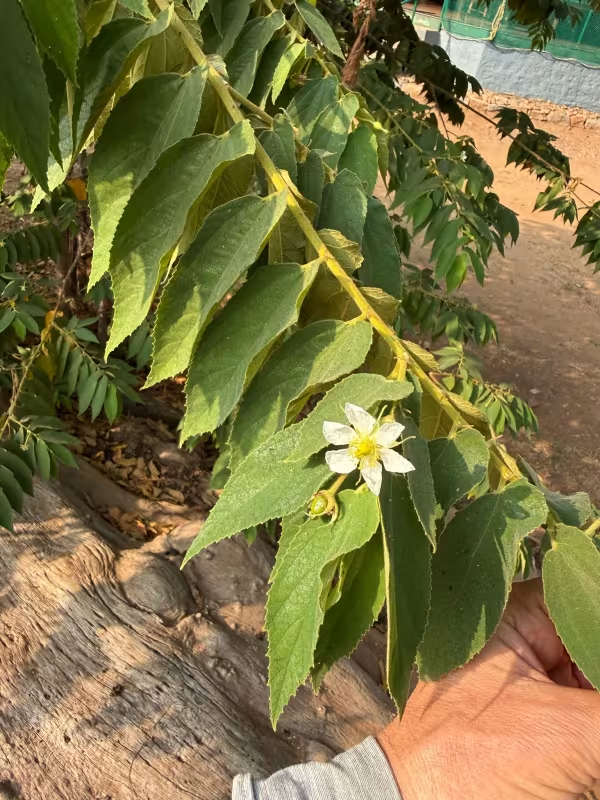
Description
Sowing dates
Muntingia calabura is typically propagated via seeds or cuttings. Seeds are extremely small and should be surface-sown on moist, well-draining soil, as they require light to germinate effectively.
In natural habitats, these seeds are spread by birds and bats that consume the fruit. In agricultural settings, maintaining a consistent temperature between 22 and 28 degrees Celsius is crucial for successful seed germination.
Cuttings are often preferred for commercial production to ensure genetic uniformity. Cuttings are taken from healthy branches and rooted in a medium that retains moisture but prevents waterlogging.
The growth rate of seedlings is exceptionally fast. Once established, these plants can reach significant heights within the first two years, often growing several meters in favorable conditions.
When planting, provide ample space for the canopy to spread. A spacing of 5 to 7 meters between trees is generally recommended to ensure good airflow and access to sunlight.
Growing requirements
Muntingia calabura is a member of the Muntingiaceae family, native to tropical regions. It thrives in hot, humid climates and is highly sensitive to frost, which limits its outdoor cultivation to tropical and subtropical zones.
The tree requires full, direct sunlight to achieve its maximum potential for growth and fruit production. Shaded areas result in leggy, spindly trees and significantly lower yields.
The tree is versatile regarding soil types, tolerating a range of conditions from sandy to clay-heavy soils. However, it performs best in fertile, well-draining soils with a near-neutral pH.
While Muntingia is relatively drought-tolerant once established, supplemental irrigation is necessary during dry spells to maintain high fruit quality and continuous production.
It prefers temperatures between 20 and 35 degrees Celsius. It does not tolerate cold weather; even light frost can cause severe damage to the foliage and younger branches, potentially killing the tree.
Yield
One of the most remarkable features of Muntingia calabura is its rapid fruit production, with young trees beginning to bear fruit within 18 to 24 months of planting.
Under optimal conditions, the tree produces fruit continuously throughout the year. The berries are small, round, and turn bright red when fully ripe, offering a sweet, musky flavor reminiscent of strawberries.
The fruit is consumed fresh, often used in jams, jellies, and desserts. Due to the high sugar content and thin skin, the berries are highly attractive to local fauna and serve as an important food source.
The yield potential is very high due to the constant flowering cycle. A single mature tree can provide a steady, daily supply of fruit for local consumption or small-scale market sales.
This species is highly regarded for its utility in agroforestry and as a fast-growing ornamental tree that provides both shade and nutritional value.
Main diseases and pests
Muntingia calabura is notably robust and resistant to most major agricultural pests and diseases, making it a suitable candidate for sustainable and organic cultivation practices.
Root rot is the most common issue, typically caused by poorly drained soils or over-irrigation. Ensuring proper soil drainage is the most effective preventative measure against this pathogen.
While generally pest-free, the leaves may occasionally attract foliage-feeding caterpillars. These are rarely problematic enough to require chemical intervention, as the tree usually recovers quickly.
Mealybugs or aphids can sometimes infest the tree, particularly in greenhouse environments or where there is poor air circulation. Natural oils or bio-based soaps are generally sufficient for management.
The tree is more prone to physical breakage during high winds due to its fast growth and relatively soft wood, rather than biological threats.
Harvesting
Harvesting Muntingia calabura is an ongoing, year-round process because the tree produces flowers and ripe fruit simultaneously. Frequent checks of the orchard are necessary to collect berries at their peak.
Ripeness is indicated by a deep pink to red color and a soft, yielding texture. Berries that are overripe should be collected promptly to prevent fermentation and attracting unwanted pests.
The fruit is extremely delicate and bruises easily. Manual harvesting into shallow containers is required to maintain fruit integrity and quality during the transfer from the tree to the processing or sales point.
Shelf life for harvested berries is very short, often only lasting a day or two without specialized cooling. For this reason, marketing is usually localized or the fruit is processed immediately.
Efficient management of the harvest cycle allows smallholder farmers to generate consistent, small daily incomes, making the Muntingia tree a valuable asset for local food security.