
Caesulia axillaris
Caesulia axillaris
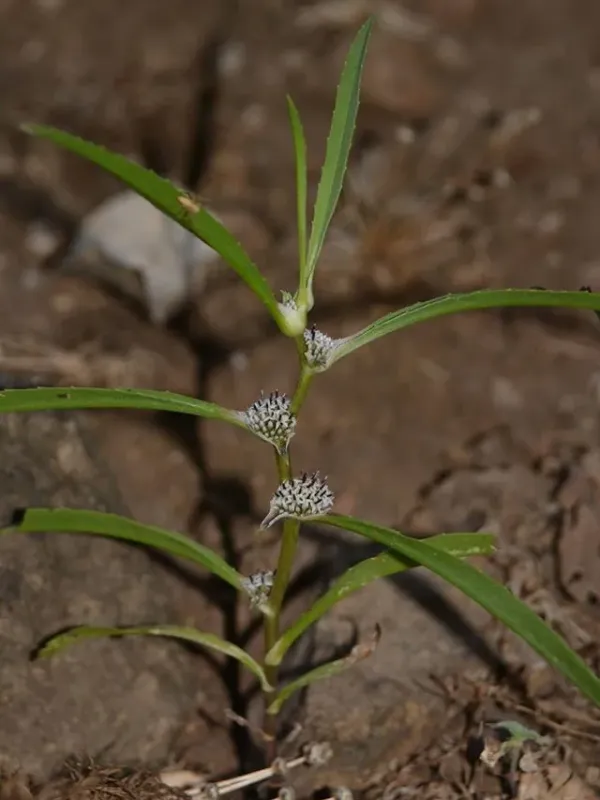
Description
Growing requirements
Caesulia axillaris is an annual herbaceous plant belonging to the Asteraceae family. It is a highly specialized plant that thrives in wetland environments, often found in tropical regions throughout Asia, including India and Southeast Asia.
The plant is widely recognized in agronomy primarily as a common weed in rice paddies. Due to its preference for aquatic or semi-aquatic habitats, it easily colonizes areas with stagnant water, irrigation channels, and marshy plains.
Botanically, it features simple lanceolate leaves and white flower heads that grow in the axils of the leaves. This unique floral arrangement is the primary identifying characteristic of the species and is reflected in its scientific nomenclature.
Regarding growth requirements, the plant is extremely tolerant to waterlogged soil conditions. It prefers humid tropical climates where high temperatures and regular rainfall or flooding create the ideal conditions for rapid vegetative biomass accumulation.
While often viewed as a weed, the plant has historically been utilized in local traditional medicinal practices. Its secondary metabolites are studied for their potential antimicrobial properties, marking it as a subject of interest in ethnobotanical research.
Main diseases and pests
Caesulia axillaris is highly resilient due to its specialized ecological niche. However, like most members of the Asteraceae family, it can be susceptible to fungal infections during prolonged periods of high humidity and heat, particularly those caused by rust fungi.
Agricultural management mainly involves manual removal or chemical control in integrated farming systems. Ensuring proper field drainage and precision water management is the most effective method for suppressing the density of this plant in commercial crops.