
Cadia purpurea
Cadia purpurea
Description
Growing requirements
Cadia purpurea is a notable shrub or small tree belonging to the Fabaceae family, native to the arid and semi-arid regions of East Africa and the Arabian Peninsula, particularly Ethiopia and Yemen.
The plant thrives in well-drained, sandy, or rocky soils and is highly adapted to tropical climates with distinct wet and dry seasons. It requires full sunlight to develop a compact and healthy crown structure.
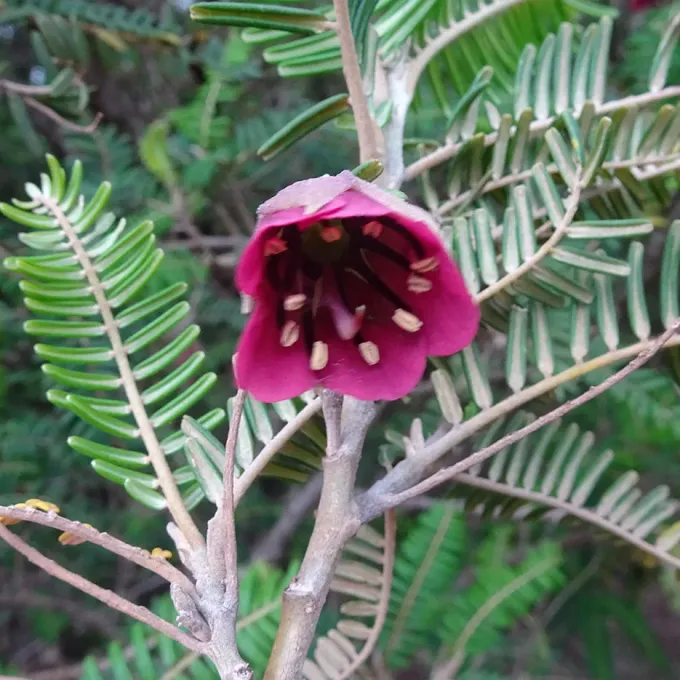
Botanically, this species is distinguished by its feathery, pinnate leaves and its unique, bell-shaped flowers that bloom in shades of purple, pink, or white, providing significant visual interest in landscapes.
In terms of agricultural and horticultural utility, Cadia purpurea is valued for its hardiness, which allows it to survive in challenging environments where other woody species might struggle.
The cultivation of this plant requires attention to proper drainage, as excessive moisture in the root zone is the most common cause of decline, reflecting its adaptation to dry native habitats.
Main diseases and pests
The primary threats to the health of Cadia purpurea are fungal root diseases caused by poor drainage, which can rapidly lead to the decay of the root system if the soil remains waterlogged.
Pests such as spider mites and mealybugs are frequently observed, particularly in arid conditions where the plant is under stress, leading to stunted growth and leaf chlorosis.
In humid conditions, the plant may become susceptible to powdery mildew, which affects the leaves and stems, reducing the aesthetic appeal and photosynthetic capacity of the shrub.
Management strategies involve regular inspections for pest colonies, the use of systemic insecticides if infestations become severe, and ensuring proper airflow through periodic pruning of the branches.
Agricultural monitoring should focus on early detection of leaf spots or wilting, as these are often precursors to systemic infections that are difficult to treat if left unmanaged for extended periods.