
Buxbaumia viridis
Buxbaumia viridis
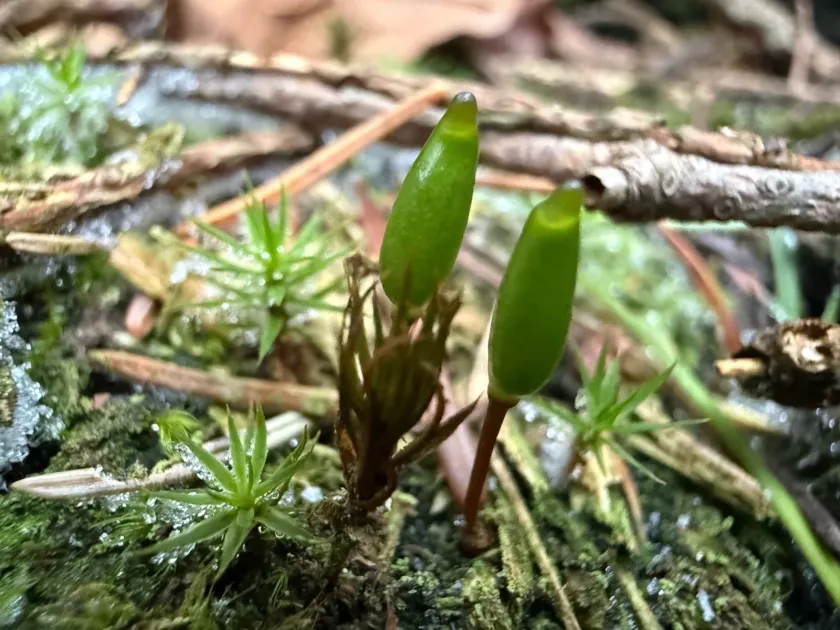
Description
Growing requirements
Buxbaumia viridis is a specialized species of moss belonging to the family Buxbaumiaceae. It is not an agricultural crop but a protected bryophyte of significant interest to conservationists and ecologists worldwide.
Botanically, the plant is characterized by its distinct, capsule-like sporophytes. Unlike many other mosses, it lacks significant leafy growth and relies on a well-developed protonema network embedded within decaying wood.
The habitat requirements are extremely strict. The species is found exclusively on decaying logs of both coniferous and deciduous trees in moist, shaded environments, typically within old-growth forests that maintain high relative humidity.
Its natural range covers temperate regions of Europe and North America. The distribution is highly fragmented, as the moss requires a continuous supply of decaying wood at specific stages of decomposition to sustain its population.
Conservation status is critical in many regions. Since it cannot be cultivated in typical farming environments, the primary focus is the protection of its natural habitat from deforestation and forestry practices that remove deadwood.
Main diseases and pests
The main threats to Buxbaumia viridis are modern forestry operations. The systematic removal of dead, rotting wood from forest floors creates a loss of substrate, making it impossible for the moss to propagate and colonize new areas.
Environmental degradation, including the drainage of forest soils and the reduction of canopy cover, leads to the rapid desiccation of the microhabitats required by this moss. Any drastic change in the forest climate usually results in localized extinction of the species.