
Bug-on-a-stick
Buxbaumia aphylla
Description
Growing requirements
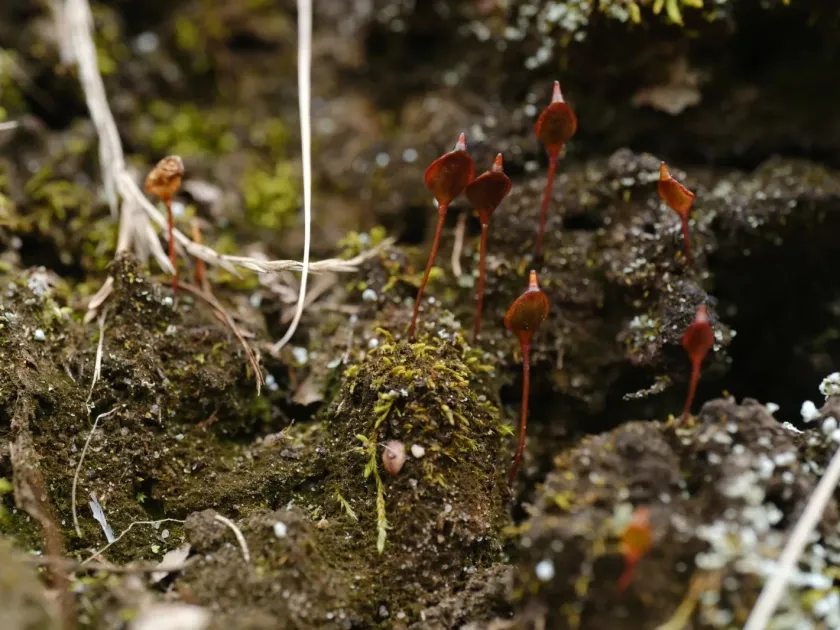
Bug-on-a-stick (Buxbaumia aphylla) is a distinctive bryophyte belonging to the Buxbaumiaceae family. It is not an agricultural crop but rather a specialized organism that plays a significant role in forest biodiversity and ecological health.
The species is found throughout the Northern Hemisphere, inhabiting temperate forest zones. It typically grows on decayed wood, damp soil, or peat, acting as a natural colonizer in undisturbed woodland environments.
Botanically, Buxbaumia aphylla is remarkable for its lack of vegetative leaves. The organism consists of an extensive protonema and a prominent, asymmetrical spore-bearing capsule that gives it the appearance of a tiny insect perched on a stem.
Environmental requirements are strict and highly specific. The species thrives only in microclimates with consistent high humidity and shaded conditions. It cannot be cultivated using standard agronomic practices, as it requires specific fungal associations to survive.
In terms of economic or practical use, it serves as an important bioindicator for foresters and conservationists. Its presence is highly valued for monitoring the health of forest soils and tracking the impact of environmental changes on non-vascular plant diversity.