
Burnatia enneandra
Burnatia enneandra
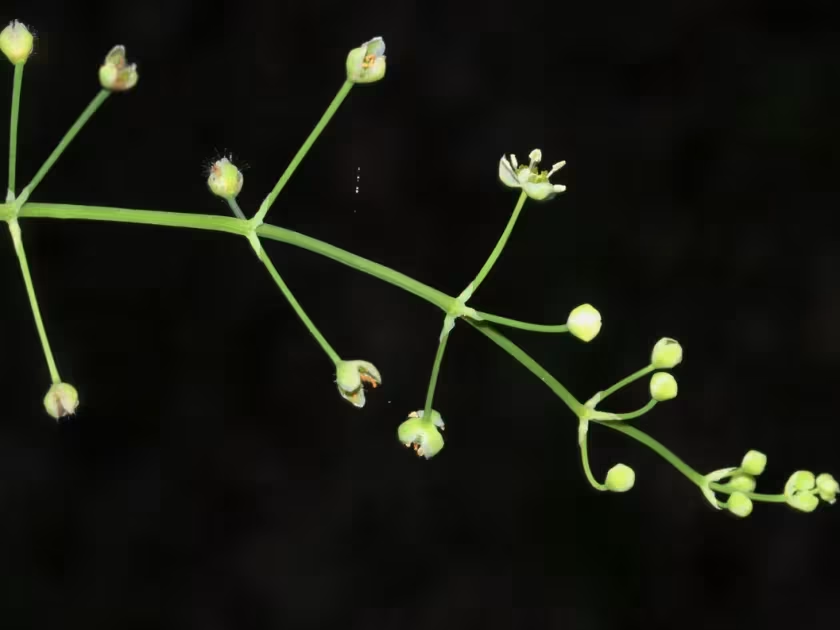
Description
Sowing dates
Burnatia enneandra is a perennial herbaceous plant belonging to the Alismataceae family, native to the tropical wetlands of Africa. Propagation is primarily achieved through seeds which naturally disperse in the receding waters of seasonal floodplains.
In cultivation, sowing should mimic the natural cycle of the wet season. Seeds require a submerged or saturated substrate to initiate germination, making the control of water levels the most critical factor during the initial establishment phase.
The optimal sowing season is determined by the arrival of high ambient temperatures. Seeds should be spread across a rich, muddy bottom in shallow water depths ranging from 5 to 15 centimeters to ensure stability and warmth for the developing seedlings.
Proper water quality management is essential. Using stagnant or slow-moving water helps to keep the substrate anaerobic, which is conducive to the growth of this specific hydrophyte, while preventing the growth of invasive algae that might compete for nutrients.
Seed germination typically occurs within two to three weeks under consistent temperatures of 25-30 degrees Celsius. Once the plants reach the two-leaf stage, they become more resilient to minor fluctuations in water levels, provided the soil remains consistently moist.
Growing requirements
Burnatia enneandra requires high soil moisture levels or permanent shallow water coverage to thrive. The plant is perfectly adapted to the tropical climate, where it survives in environments characterized by rhythmic wet and dry periods.
Soils should be composed of silt and organic matter, providing a nutrient-rich foundation. The plant demonstrates a preference for acidic to neutral pH levels, reflecting the chemistry of naturally occurring tropical swamp systems.
High levels of solar radiation are necessary for the plant's metabolic functions. Sufficient light exposure during the growth cycle directly influences the vitality of the plant and its eventual ability to produce flowering structures and fertile seeds.
The plant demands a strictly tropical climate with stable warm temperatures. It is highly intolerant of cold or freezing temperatures, as these conditions are not present in its natural African range and can lead to immediate tissue decay.
Water movement should be minimal. The plant is naturally found in low-energy aquatic environments like shallow pools, marshes, and the margins of slow-moving streams where sediment accumulation creates a soft, nutrient-dense rooting zone.