
Bungea trifida
Bungea trifida
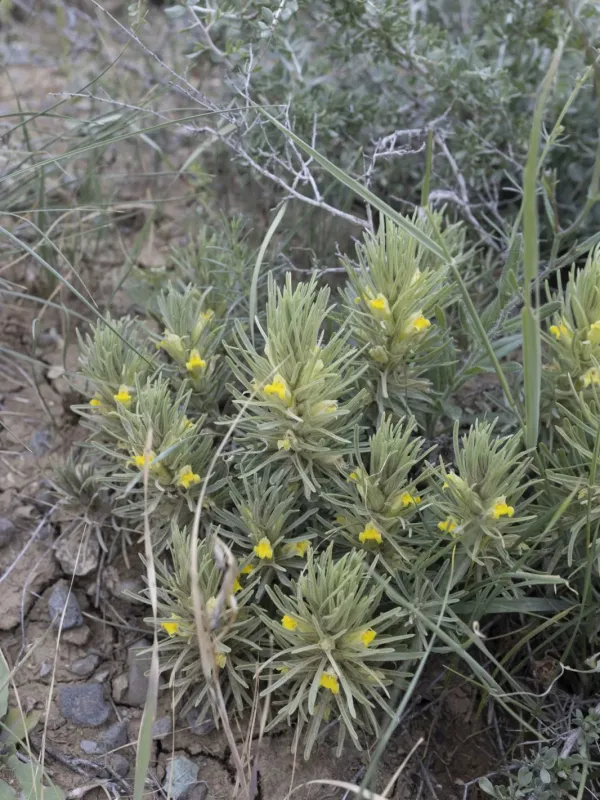
Description
Growing requirements
Bungea trifida is a herbaceous plant belonging to the Orobanchaceae family. It is widely recognized by botanists for its specialized adaptation to arid environments through a semi-parasitic lifestyle.
The plant functions as a root hemiparasite, utilizing haustoria to attach itself to the root systems of various steppe grasses. This relationship allows Bungea trifida to thrive in nutrient-poor or saline soils where competing vegetation struggles to survive.
The geographic range of this species covers the steppe and semi-desert regions of Eurasia. It prefers open, sunny locations with minimal canopy cover, allowing it to complete its life cycle during the spring and early summer.
Cultivation requirements involve well-drained, sandy or light loamy soils. The species is highly sensitive to waterlogging, as its root system and haustoria are prone to decay if soil oxygen levels are low.
Botanically, Bungea trifida is characterized by its distinct trifid leaves and dense, spike-like inflorescences. Its overall growth pattern is relatively compact, allowing it to withstand high winds common in its native steppe habitat.
Main diseases and pests
The primary threats to Bungea trifida are related to environmental changes, particularly soil moisture fluctuations. Excessive rain leads to root rot, which is the most frequent cause of mortality for this species.
Pests such as aphids and leaf-eating beetles may occasionally colonize the aerial parts of the plant. However, due to its specialized nature, it generally experiences less pressure from generalist herbivores compared to typical forage grasses.
Maintaining a healthy community of host plants is vital. The disappearance of suitable grass species effectively removes the host source, causing the local population of Bungea trifida to decline rapidly.
Effective management requires the avoidance of systemic herbicides that could disrupt the delicate balance of the parasitic connection between the plant and its host.
In experimental or conservation settings, manual weeding is preferred over chemical interventions to protect the integrity of the soil microbiome and the viability of the host plants.