
Bulbostylis barbata
Bulbostylis barbata (Rottb.) C. B. Clarke
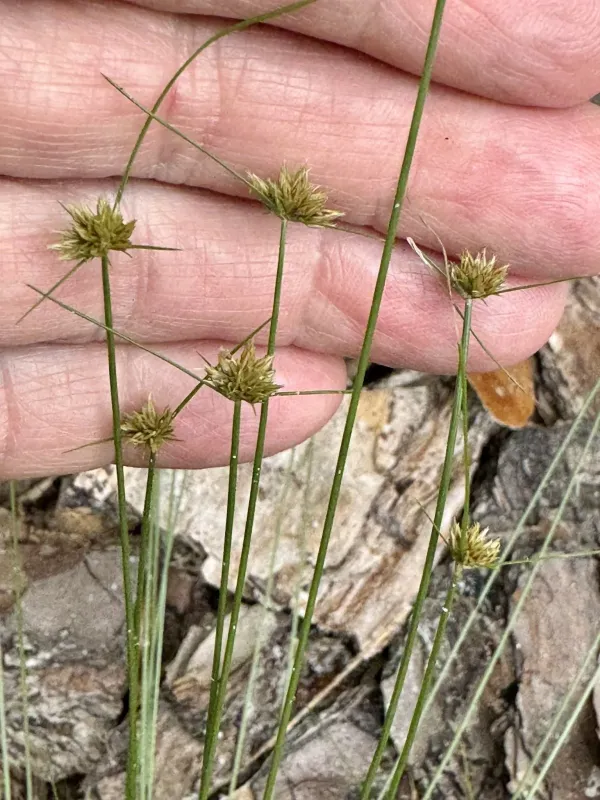
Description
Growing requirements
Bulbostylis barbata is a notable member of the Cyperaceae family. It is an annual sedge-like plant widely distributed across tropical and subtropical regions, often found in arid and semi-arid landscapes.
This species is highly adapted to sandy, nutrient-poor soils where moisture availability is inconsistent. Its ability to colonize such environments makes it a resilient candidate for landscape stabilization and forage trials.
Climatic requirements focus on high light intensity and thermal stability. The plant thrives under full sun exposure, displaying a high tolerance for heat stress that would normally be fatal to more sensitive crops.
Cultivation practices require excellent drainage. The plant is particularly sensitive to waterlogging, which can cause significant damage to the root system and inhibit its natural physiological development.
Botanically, it forms small, tufted patches with filiform leaves. The inflorescence consists of distinct spikelets that are essential for identification, reflecting its adaptation to challenging environmental niches.
Main diseases and pests
The primary threats include fungal pathogens that develop during periods of excessive humidity. Root rot remains the most common issue for these plants when grown in heavy or poorly draining soils.
Insects such as aphids and various larvae can damage the vegetative tissues. Regular scouting is essential to identify infestations before they cause significant yield loss in the crop density.
Competition from aggressive, fast-growing weeds is a significant concern during the early establishment phase. Without adequate weeding, the crop may be easily overwhelmed in its juvenile stages.
Environmental stress, particularly sudden cold snaps or excessive rainfall during seed maturation, can negatively affect the overall vitality and reproductive success of the plant population.
Integrated pest management strategies focusing on drainage optimization and cultural controls remain the best approach for maintaining healthy stands of this species in an agricultural setting.