
Buckleya distichophylla
Buckleya distichophylla
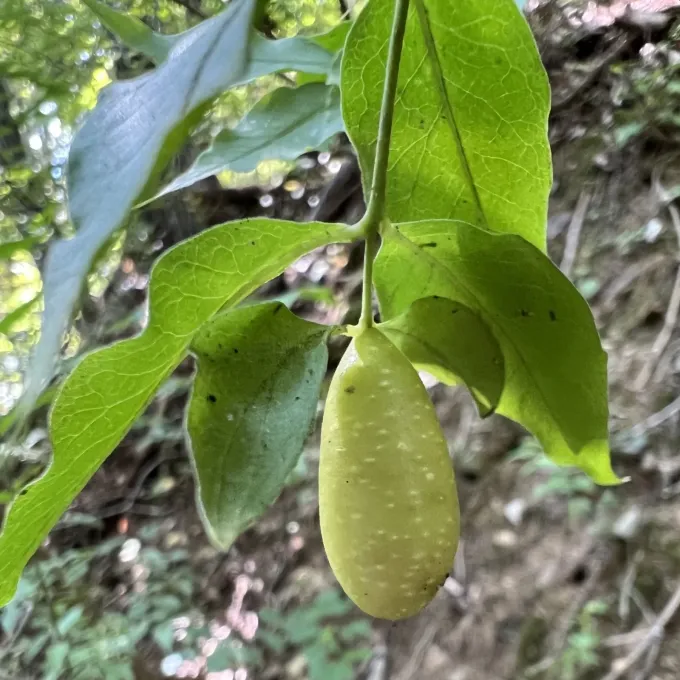
Description
Growing requirements
Buckleya distichophylla belongs to the Santalaceae family and is a rare deciduous shrub known for its hemiparasitic nature. It is native to the Appalachian Mountains in the United States, where it thrives in moist, forested habitats.
The plant is biologically specialized to rely on host species, primarily hemlocks (Tsuga), for water and mineral nutrients. Its roots develop haustoria, which penetrate the root systems of the host tree to establish a parasitic connection.
Growing this species requires conditions that mimic its natural temperate forest environment. It prefers well-drained, slightly acidic soils and high humidity, making it extremely difficult to cultivate in standard garden settings.
The agricultural or horticultural application of Buckleya distichophylla is non-existent due to its complex dependency on specific host trees. It is essentially a plant of conservation interest rather than a crop.
Successful long-term survival of the plant depends on maintaining the health of the associated forest ecosystem. Any attempt to cultivate it outside of its native habitat requires extensive preparation of the substrate and the presence of established host trees.
Main diseases and pests
The primary threat to the species is the decline of its main host, the hemlock tree, due to the hemlock woolly adelgid (Adelges tsugae). As host populations disappear, the dependent Buckleya cannot sustain itself.
Soil-borne pathogens represent a significant risk to the plant, especially when it is young or when its root connections to the host are compromised. Root rot can quickly destroy the haustoria, leading to total plant failure.
Folivorous insects can damage the canopy of the shrub, reducing its ability to photosynthesize. While this is less fatal than root issues, excessive defoliation weakens the plant, making it more susceptible to environmental stress.
Environmental instability, including climate change and habitat fragmentation, poses long-term risks. The species lacks the adaptability to survive in altered ecosystems where the required soil moisture levels are not maintained.
Management of pests and diseases for this species is highly complex because traditional chemical controls may impact the host tree as well. Therefore, conservationists focus on ecosystem-level protection rather than individual plant treatments.