
Short-awn brome
Bromus breviaristatus
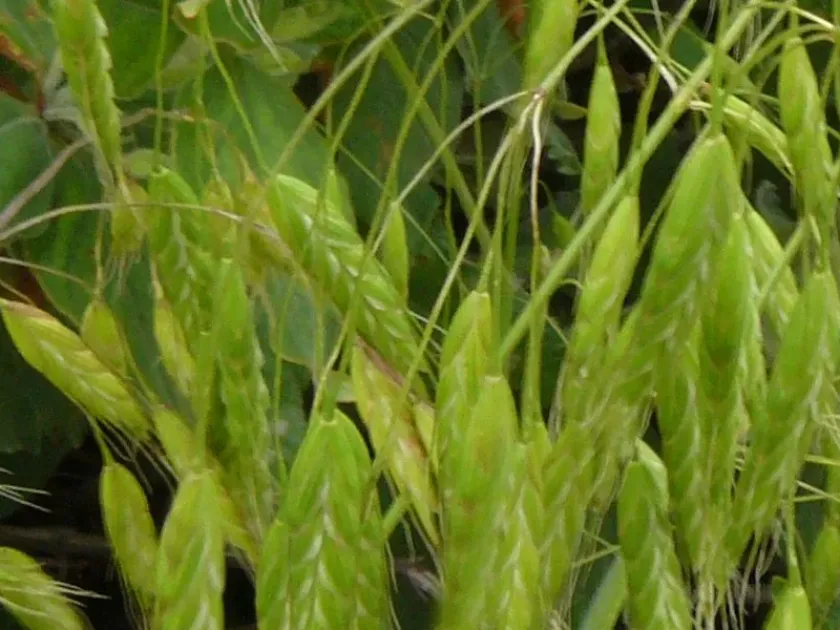
Description
Sowing dates
Short-awn brome (Bromus breviaristatus) is a productive perennial grass species belonging to the Poaceae family. It is widely recognized for its ability to establish quickly and provide a reliable source of forage for livestock in various agricultural settings, especially in pasture and hay mixtures.
The optimal time for sowing is during early spring when soil moisture is at its peak, facilitating rapid germination. In regions with milder climates, late autumn seeding is also an option, allowing the seeds to undergo natural stratification and emerge early in the following spring season.
When sowing, a seeding depth of approximately 2 to 3 centimeters is considered ideal. Deeper placement of seeds may result in poor emergence due to energy exhaustion, while sowing too shallow can lead to seed desiccation if the topsoil dries out under direct sunlight.
Utilizing a standard drill-seeding method with rows spaced at 15 cm ensures an even stand across the field. This uniformity is crucial for competitive success against weeds, which can be particularly troublesome during the establishment phase of perennial grass crops.
Post-seeding compaction using a roller is a highly recommended practice to improve soil-to-seed contact. This step is vital for moisture uptake, ensuring that the seeds have the best possible chance to establish a strong root system before the onset of more challenging environmental conditions.
Growing requirements
This grass species is known for its ecological plasticity, though it performs best on fertile loamy soils. It prefers neutral to slightly alkaline soil pH levels, but it shows decent tolerance to a variety of soil types provided there is adequate drainage and aeration for root health.
Short-awn brome exhibits excellent cold tolerance, making it suitable for northern climates and areas with harsh winters. It is known for its ability to green up early in the spring, offering a significant advantage for early-season grazing before many other grasses have started active growth.
Sunlight is a key requirement for optimal biomass production. The grass should be planted in open areas where it can receive full sun, as shaded conditions significantly reduce its vigor, tiller development, and overall nutritional value for grazing animals.
While the species is relatively drought-tolerant once established, it does not perform well in waterlogged soils. Ensuring that the chosen fields have efficient drainage is essential to prevent root rot and other moisture-related diseases that can decimate a healthy stand.
Fertilization management plays a critical role in the long-term productivity of the field. Nitrogen, phosphorus, and potassium applications are recommended to support vigorous vegetative growth and maintain the stand's density over many years of intensive agricultural use.
Yield
The yield potential of short-awn brome is heavily dependent on the management strategy and environmental inputs. Under favorable conditions, the grass is capable of producing multiple cuts per season, providing a steady supply of high-quality forage throughout the growing period.
Peak production is typically observed in the second and third years of the stand's life cycle. During these years, the root system is fully mature, allowing the plant to effectively utilize nutrients and water, resulting in the highest biomass yields for the producer.
Harvest timing is the most critical factor influencing forage quality. Cutting the brome at the early heading stage ensures the best balance between total yield and nutritional content, specifically protein and digestibility, which are essential for livestock performance.
In grazing scenarios, the grass demonstrates good regrowth capability after being browsed by livestock. Its resilience makes it an excellent choice for rotational grazing systems, as it can recover quickly, provided that the stocking rate is managed to prevent overgrazing of the crown.
Weed management is vital to maintaining yield targets. If weeds are allowed to proliferate, they compete for critical resources such as water and nitrogen, which directly leads to lower biomass production and shorter stand life for the cultivated brome grass.
Main diseases and pests
Like most perennial grasses, short-awn brome can be affected by various fungal diseases, with rusts and powdery mildew being the most common threats. These diseases can reduce leaf area and lower the overall nutritional value and palatability of the harvested forage.
Preventative measures are essential for disease management. Maintaining appropriate plant density helps improve air circulation within the canopy, which effectively reduces the humidity levels that favor the rapid spread of fungal spores across the field.
Insect pests such as grass flies and aphids can also cause damage to developing tillers and young plants. Regular monitoring of the field is necessary to detect outbreaks early, allowing for targeted intervention if the pest population reaches economic injury levels.
The use of chemical controls should be considered a last resort and must be managed in accordance with local environmental safety regulations. Integrated pest management (IPM) strategies, which prioritize crop rotation and healthy soil management, are the most sustainable approach.
Using high-quality, certified seeds for initial planting serves as the first line of defense against both diseases and weed infestations. By starting with a clean, healthy stand, farmers can reduce the need for intensive management practices throughout the crop's lifecycle.