
Upright brome
Bromopsis erecta
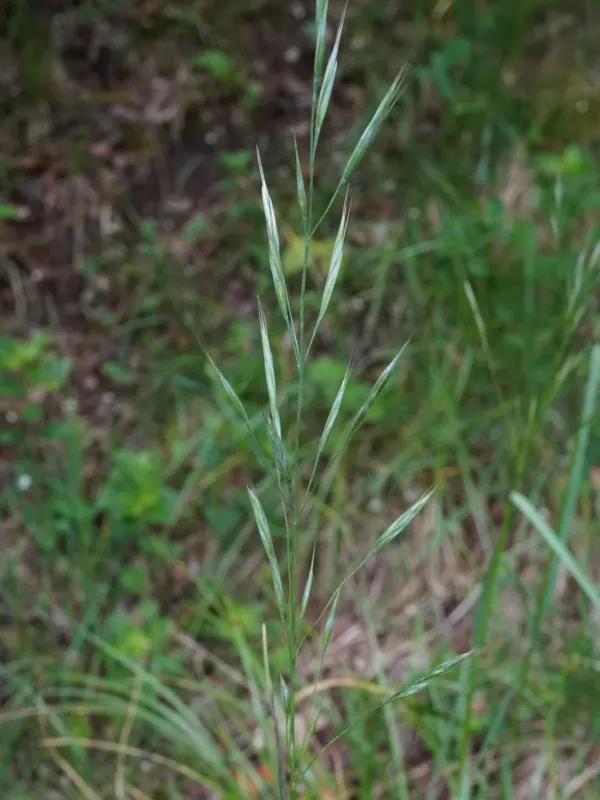
Description
Sowing dates
Upright brome (Bromopsis erecta) is a perennial grass of the Poaceae family. In agricultural practice, sowing is typically carried out in the spring when soil temperatures reach 8–10 degrees Celsius, or in late summer to ensure better establishment before winter.
To establish a productive stand, seeds are sown using a conventional row-drilling method. The optimal seeding depth ranges from 1.5 to 2.5 centimeters, depending on soil type and moisture content at the time of sowing.
The seeding rate depends on whether the crop is grown as a monoculture or in a mixture. When grown as a pure stand for hay production, a seeding rate of 12–16 kg per hectare is generally recommended.
A crucial factor for success is proper seedbed preparation; the soil should be leveled and sufficiently firm to ensure excellent seed-to-soil contact for uniform germination.
Rolling the soil after sowing is highly recommended, as it improves field emergence and ensures a more uniform stand, especially in regions with dry spring conditions.
Growing requirements
This grass species demonstrates high ecological plasticity but thrives best in sunny locations with moderate moisture. It is particularly well-adapted to calcareous and stony soils, making it valuable for reclaiming slopes.
Upright brome is known for its excellent drought tolerance and winter hardiness. It grows successfully in forest-steppe and steppe zones, maintaining productivity even when seasonal rainfall is limited.
While not overly demanding regarding soil texture, it achieves best results on loose, well-aerated chernozems and calcareous soils with a neutral pH level.
The plant features a robust, deep-penetrating root system, allowing it to efficiently utilize subsoil moisture during the peak heat of the summer months.
Optimal growth performance is observed under full sunlight conditions; shade or excessive waterlogging can significantly reduce biomass productivity and long-term vitality.
Yield
The biomass yield of Upright brome depends significantly on soil fertility and nutrient management. Applying nitrogen fertilizers in early spring provides a noticeable boost in vegetative mass.
Under natural conditions and with moderate maintenance, the crop provides stable yields. Its primary agricultural value lies in its longevity, as the stand can remain productive for 8–10 years on the same field.
Seed production capacity varies depending on seasonal weather patterns. Timely harvesting of seed crops is essential to prevent shattering and to ensure the availability of high-quality planting material.
Agricultural use includes high-quality hay production and intensive grazing, as the grass is palatable and tolerant to livestock trampling and grazing pressure.
Regrowth capacity after cutting is moderate, but under favorable moisture and nutrient availability, it is possible to achieve two harvests per growing season.
Main diseases and pests
Upright brome possesses natural resistance to many common cereal diseases. However, in years with high humidity, it may become susceptible to powdery mildew or rust, which reduces forage quality.
Regarding pests, cereal flies that damage stems in the early growth stages and meadow bugs that impact seed fields are considered the primary threats to productivity.
Integrated management practices, including regular crop rotation and timely mowing, are the most effective ways to disrupt the life cycles of common insect pests and reduce pathogen pressure.
Excessive stand density increases the risk of fungal infections; therefore, maintaining appropriate sowing rates and avoiding excessive plant residue buildup is essential for field health.
Selecting disease-resistant ecotypes and using high-quality, treated seed are the best preventative measures for maintaining healthy and productive stands of this crop.
Harvesting
For high-quality hay production, the best harvesting time is the early flowering stage, when the biomass contains the maximum concentration of proteins and essential nutrients.
During mowing, it is important to leave enough stubble to protect the crown and growing nodes, which significantly promotes rapid regrowth for subsequent cuts or grazing.
Seed harvesting requires precision because the seeds are prone to shattering as they reach full maturity. The optimal time is during the dough stage, when the panicles show a characteristic color change.
After cutting, the biomass should be left in windrows for drying to preserve the nutritional value and color of the foliage, which are critical parameters for premium fodder quality.
Professional harvest management ensures not only the quality of the current year's yield but also the long-term vigor of the stand, allowing for productive regrowth in subsequent years.