
Brocchia cinerea
Brocchia cinerea
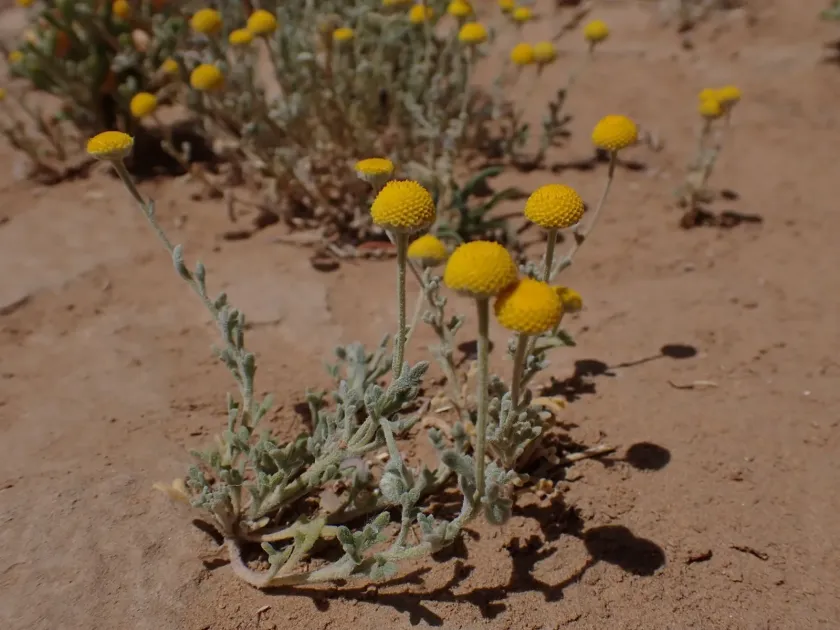
Description
Sowing dates
Brocchia cinerea is an ephemeral plant species, specifically adapted to the growth cycles of arid and desert environments. Sowing times are dictated by the onset of rainy seasons, as the seeds require sufficient moisture to initiate germination in sandy soil conditions.
In its native habitat, germination occurs rapidly following rainfall, allowing the plant to form a leaf rosette before the soil moisture depletes. When cultivating, it is essential to use well-drained substrates to simulate natural environmental conditions.
Seeds should be planted at a shallow depth, as the small seeds have limited energy reserves for emergence. The optimal temperature for starting the growth phase typically ranges from +15 to +22 degrees Celsius.
Given its short life cycle, management practices must be strictly synchronized with the wet season. Under drought stress, the plants either enter dormancy or conclude their growth cycle prematurely to ensure seed survival.
Appropriate spacing is critical to minimize competition for limited water resources. Overcrowding can lead to rapid moisture depletion and the subsequent death of weaker plants within the stand.
Growing requirements
Brocchia cinerea is an herbaceous plant belonging to the Asteraceae family, evolved for survival in extreme conditions, particularly across the arid regions of the Sahara. It is a true xerophyte, highly efficient at utilizing minimal precipitation.
The plant thrives in sandy, stony, or silty soils with very low organic matter content. Excellent soil aeration is a primary requirement for the development of its root system, which is adapted to penetrate deep into arid substrates.
The species requires high solar radiation and is highly sensitive to waterlogging. Excessive moisture in the root zone, combined with low temperatures, can lead to the rapid development of root rot and total loss of the crop.
Brocchia cinerea exhibits high resistance to the sharp diurnal temperature fluctuations characteristic of desert climates. It maintains physiological activity as long as basic soil moisture levels are maintained throughout the growing season.
Mineral nutritional requirements are minimal. The plant is capable of extracting necessary nutrients from extremely poor soils, though modest additions of phosphorus can enhance early development and overall seed production.
Yield
Agricultural use of Brocchia cinerea is primarily limited to its role as a supplementary forage resource in desert pasture management. The green biomass provides essential fiber to livestock during periods when other vegetation is unavailable.
Biomass yield varies significantly depending on seasonal rainfall patterns. In severely dry years, productivity may be limited, making large-scale harvesting economically unfeasible compared to controlled grazing.
Seed production is the secondary harvest objective, particularly for ecological restoration projects. Productivity depends on the duration of the flowering phase and the availability of water during the pollination period.
In grazing systems, rotational management is essential to prevent overgrazing and ensure the soil seed bank remains viable for the following season. The plant regenerates quickly from dormant seeds when conditions are favorable.
Economic potential is focused on the improvement of degraded rangelands. Further research into biomass productivity under controlled low-volume irrigation could expand the utility of this species in arid farming systems.
Main diseases and pests
The main threats to Brocchia cinerea are fungal pathogens that proliferate during periods of abnormally high humidity. Diseases such as powdery mildew can affect the leaf apparatus if proper airflow is not maintained in the stand.
Pests common to the Asteraceae family, such as various caterpillars and grasshoppers, may feed on leaves and flower heads. In desert ecosystems, their population is usually kept in check by natural predators.
Extreme weather events, such as sandstorms and high winds, can cause mechanical damage to the stems, creating entry points for secondary infections and weakening the plants' natural defense mechanisms.
Nematodes in sandy soils can pose a hidden threat, damaging root tissues and hindering the plant's ability to extract deep-soil moisture. This vulnerability is critical during extended periods of extreme heat and drought.
Management practices focus on maintaining optimal planting density and ensuring rapid surface drainage. Chemical intervention is rarely practiced due to the remote nature of the terrain and the species' ecological adaptation.
Harvesting
Industrial harvesting of Brocchia cinerea is not standard, as the primary use is through managed livestock grazing. The grazing season begins once the plant has reached peak biomass accumulation, typically after flowering.
Seed harvesting, when required, is performed manually or with light equipment at the point of physiological maturity, before natural seed dispersal begins. Collected material must be cleaned of sand and debris.
Drying the collected seeds should be done in a well-ventilated area to prevent mold growth. Proper drying is essential to maintaining high germination rates for future planting seasons.
Moisture content must be monitored before storage, as high humidity rapidly leads to the loss of seed viability. Storing in cool, dry conditions is necessary to preserve the germinability of the harvest.
Post-harvest residues should be left on the field to provide soil cover, protecting the surface from wind erosion and facilitating natural re-seeding for the next growing cycle.