
Schizolobium parahyba
Schizolobium parahyba (Vell.) S. F. Blake
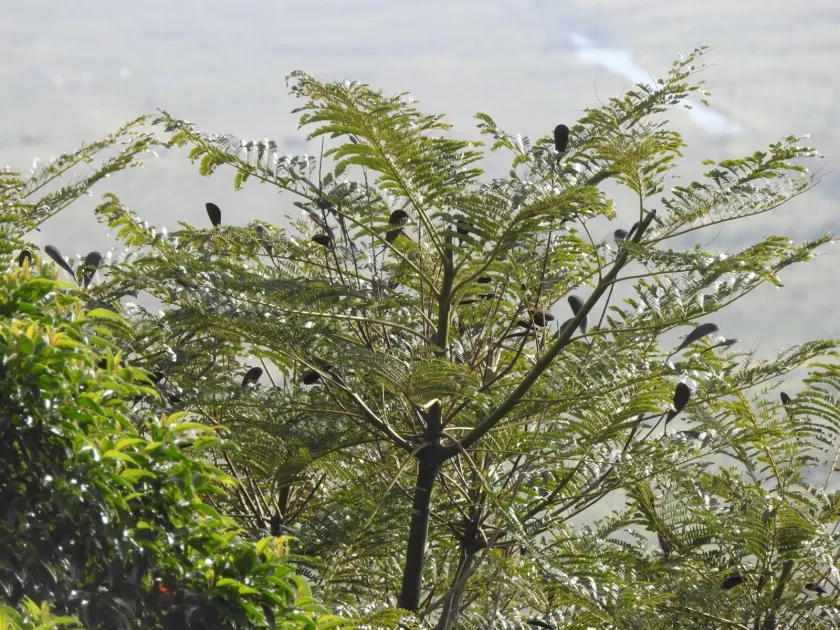
Description
Sowing dates
Schizolobium parahyba is propagated primarily through seeds. Due to their hard seed coat, seeds require scarification or hot water treatment before planting to ensure uniform and rapid germination.
In nursery settings, seeds should be sown in well-draining, lightweight soil media. Maintaining a consistent temperature of around 25-28 degrees Celsius is crucial for maximizing the germination rate within the first few weeks.
Seedlings are typically ready for transplanting once they reach a height of 40-50 centimeters. Careful handling of the root system during the transfer to the field is essential to ensure high survival rates.
The ideal planting season aligns with the onset of the rainy season, which provides the necessary moisture for the establishment of the deep root system of the young saplings.
Proper spacing is a vital factor in planting density. Depending on the intended use, a spacing of 3 to 4 meters between trees is generally recommended to provide sufficient sunlight and airflow for each specimen.
Growing requirements
As a member of the Fabaceae family, this species is world-renowned for its exceptional growth rate. It thrives in tropical climates where high temperatures and regular rainfall are present throughout the year.
The tree prefers deep, fertile, and well-aerated soils. It is particularly sensitive to waterlogging, so sites with excellent drainage are mandatory to prevent root rot and ensure healthy development.
Schizolobium parahyba is a strictly light-demanding species. It requires full exposure to solar radiation to maintain its rapid growth trajectory and to develop a strong, straight trunk.
Ideal growth temperatures range from 20 to 30 degrees Celsius. The tree is not frost-tolerant, and prolonged cold spells can be lethal, strictly limiting its cultivation to equatorial or tropical regions.
Agricultural management includes weed control during the early stages of life to reduce competition for nutrients and the occasional application of balanced fertilizers to support the massive growth spurt.
Yield
The yield of biomass from Schizolobium parahyba is unparalleled among many tropical tree species. In optimal environments, it can reach commercial timber size in less than a decade.
The wood is lightweight, porous, and easy to process, making it highly suitable for the production of plywood, paper pulp, interior furniture components, and light packing materials.
Beyond industrial yield, this tree is a powerful tool for reforestation and soil restoration projects in tropical areas. Its rapid canopy formation helps to shade out invasive grasses and prepare the ground for successional species.
The short rotation cycle of these plantations makes them an economically efficient model for timber production, yielding a consistent return on investment for large-scale forestry operations.
Management practices focused on maximizing annual growth increments ensure that plantation owners achieve the highest possible biomass output per hectare within the given 7-10 year harvest window.
Main diseases and pests
Fungal pathogens represent the most significant threat to the health of these trees, especially in areas with poor ventilation or stagnant, high-humidity air conditions that favor spore development.
Defoliating insects and wood-boring beetles can cause localized damage. Integrated pest management strategies, including the use of pheromone traps and biological control, are recommended to protect plantation health.
Water-related issues, specifically root suffocation due to improper soil drainage, often manifest as stunted growth and yellowing of the foliage, eventually leading to tree mortality.
High winds can pose a mechanical threat to the trees, particularly during the juvenile phase when the stems are thin and flexible. Providing windbreaks for young plantations can significantly reduce wind-induced losses.
- Fungal stem and bark infections
- Wood-boring insect infestations
- Root rot due to poor soil aeration
- Mechanical breakage from windstorms
Harvesting
Harvesting usually occurs between 7 and 10 years of age, depending on the targeted wood diameter. The process is streamlined to maximize efficiency, often utilizing mechanized logging equipment.
Because the wood is not naturally resistant to decay when left in contact with the ground, harvesting operations must be followed immediately by transporting the logs to a processing facility.
Standard harvesting techniques involve clear-cutting for plantation rotation or selective logging to thin out slower-growing individuals, allowing the remaining trees more room to expand.
The efficient removal of logs and the immediate replanting of the site are core elements of sustainable management, ensuring the land remains productive without long fallow periods.
Once harvested, the logs are processed into high-quality veneers and plywood, which are shipped globally to serve the furniture, construction, and packaging industry sectors.