
Spinach mustard
Brassica perviridis
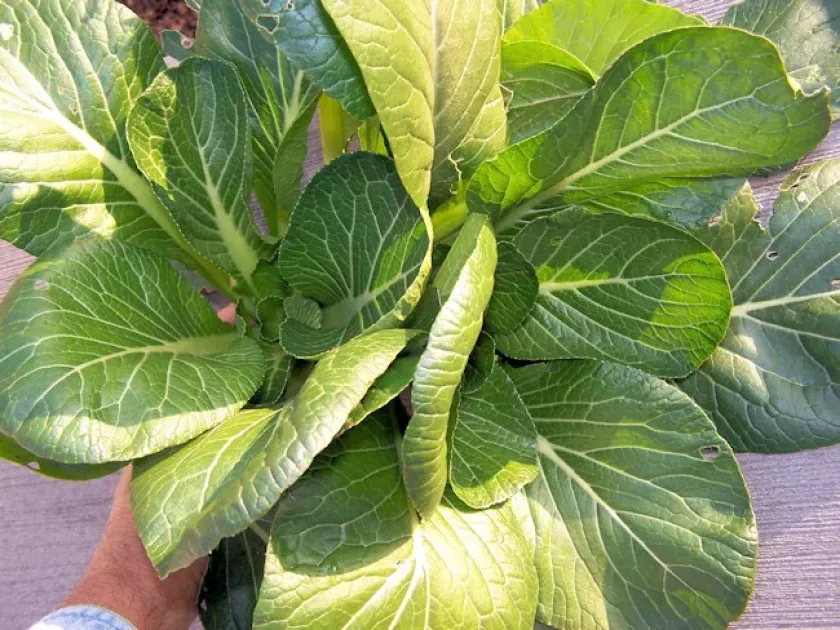
Description
Sowing dates
Spinach mustard is a cool-season crop that performs best when grown during the early spring or late summer months to avoid extreme heat.
Seeds should be sown directly into well-prepared soil as soon as it reaches a workable temperature, typically starting in early April.
Succession planting is recommended every two to three weeks to ensure a continuous supply of fresh, tender leaves throughout the growing season.
The seeds are planted at a shallow depth of about 1 centimeter, with spacing between rows maintained at approximately 25 to 30 centimeters.
Proper thinning of seedlings is essential to provide enough space for the plant to develop its characteristic rosette of succulent leaves.
Growing requirements
This member of the Brassicaceae family thrives in fertile, well-draining soils that are rich in organic matter and possess a neutral pH level.
While the plant is quite frost-tolerant, the ideal temperature range for its rapid development is between 15 and 20 degrees Celsius.
Consistent moisture is vital for quality production; dry conditions lead to premature bolting and a sharp, bitter flavor in the leaves.
The plant requires full sun to partial shade, especially in warmer climates where excessive heat can cause leaves to toughen significantly.
Application of compost before planting ensures steady nutrient availability, supporting the plant's fast-paced vegetative growth cycle.
Yield
The total yield of spinach mustard is significantly influenced by light availability and the consistency of the irrigation schedule during growth.
With optimal conditions, growers can expect to harvest between 1.5 to 3 kilograms of fresh, high-quality greens per square meter.
Because the crop matures rapidly, it allows for multiple harvests per year, significantly maximizing the productivity of the garden plot.
Nitrogen-rich amendments applied during the early growth phase are highly effective in increasing the volume of edible leaf tissue.
Careful management of plant density and weed suppression contributes to higher yields and better overall quality of the harvested produce.
Main diseases and pests
Crucifer flea beetles are the most common and damaging pests, often attacking young seedlings and creating small holes in the foliage.
Fungal diseases, including powdery mildew and downy mildew, can occur if humidity levels remain too high without adequate air circulation.
Implementing a strict crop rotation schedule helps prevent the buildup of soil-borne pathogens that target brassica species.
Keeping the garden free of cruciferous weeds minimizes the risk of attracting pests that can easily migrate to the mustard crop.
- Integrated pest management strategies
- Physical barriers like row covers
- Monitoring soil moisture to prevent root rot
- Proper spacing for airflow
Harvesting
Harvesting usually begins 30 to 45 days after planting, once the rosette of leaves has reached a sufficient size for consumption.
Individual leaves can be harvested as needed, or the entire plant can be cut just above the soil level for a single-harvest approach.
It is important to harvest before the plant initiates flowering, as the shift to reproductive growth causes the leaves to become bitter and fibrous.
For the best flavor and texture, harvest should take place in the cool early morning hours when leaf moisture content is at its highest.
Post-harvest care involves quick cooling of the leaves to maintain freshness and prevent wilting during storage or transportation to the market.